The first time my grandmother Dalida saw me making a bright blue drink in her Nashville kitchen, she didn’t just raise an eyebrow she crossed her arms, planted her feet, and delivered what I now call “The Ocean Speech.”
“Olivia,” she said in that voice that could stop you mid-pour, “food shouldn’t glow like the ocean unless it came from the ocean.”
She had a point. There I was, twenty-six years old, standing at her counter with a bottle of electric blue syrup in one hand and a wooden spoon in the other, trying to explain why I thought this ingredient this admittedly unnatural-looking ingredient belonged in a family kitchen.
I’d just discovered Blue Curacao syrup, and I was convinced it could transform ordinary lemonade into something that felt like summer vacation. But convincing my grandmother? That was going to take more than enthusiasm.
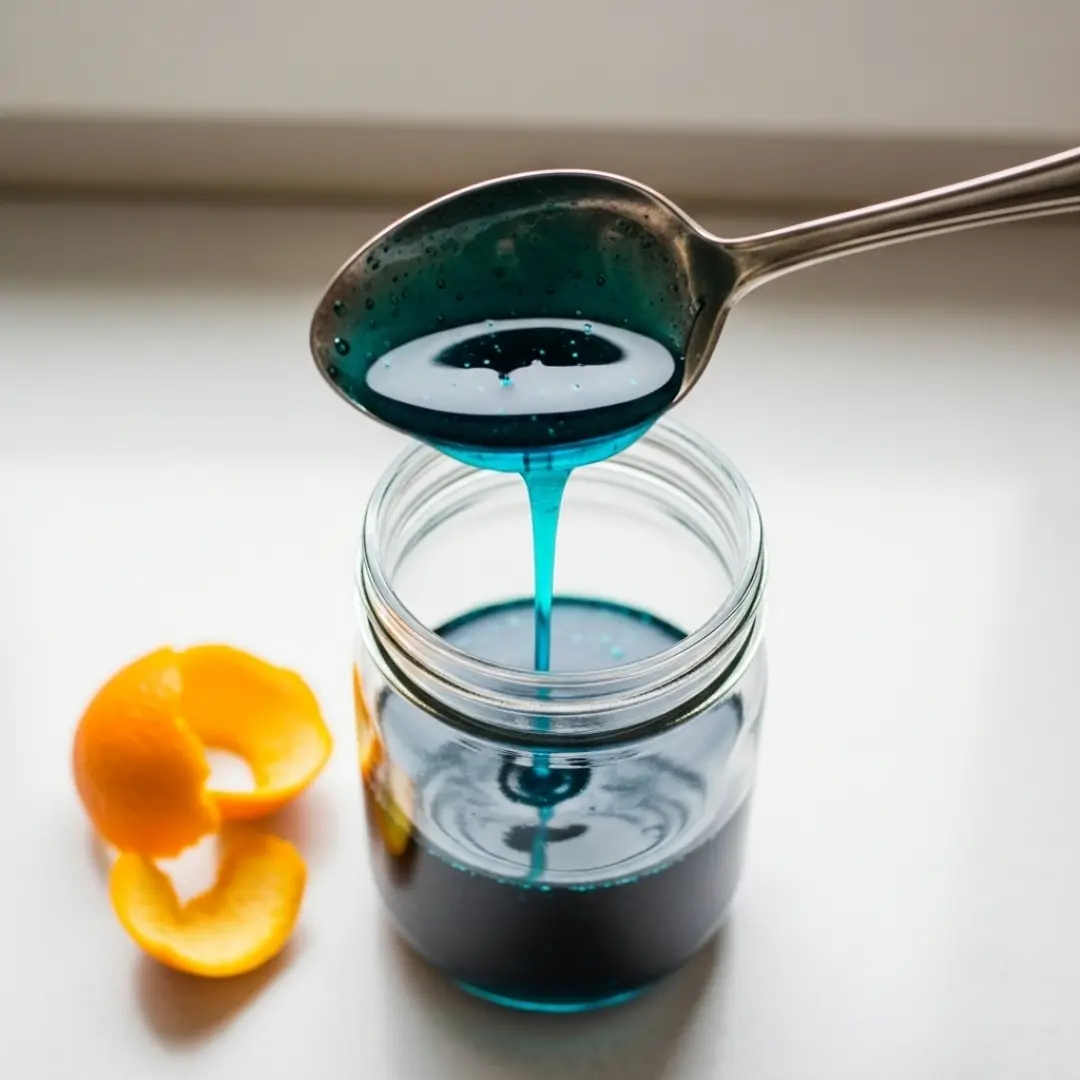
What is Blue Curacao syrup, really? It’s a non-alcoholic, orange-flavored syrup with that signature electric blue color inspired by Caribbean liqueur but made for everyone at the table. It’s citrusy, sweet, and admittedly dramatic. And yes, it glows. But here’s what I learned after months of testing, mixing, and eventually winning over the most skeptical person in my life: sometimes the ingredients that look the least traditional bring the most joy.
This is the story of how a bottle of blue syrup taught me that food can be both fun and meaningful and how my grandmother eventually admitted that maybe, just maybe, I was onto something.
The Question That Started Everything
I first saw Blue Curacao syrup on a shelf at the grocery store during one of those aimless weekend shopping trips. It was wedged between grenadine and simple syrup in the cocktail mixer aisle a bottle so vividly blue it almost looked photoshopped.
I picked it up, squinted at the label, and immediately had two thoughts: Is this food or a science experiment? and Would my mom have let me buy this?
My mother Julia was a physician assistant who spent seventeen years teaching people about preventive health and natural ingredients. She emphasized reading labels, understanding what goes into your body, and choosing quality over convenience. When she passed away in 2014, I inherited not just her recipes but her critical eye for ingredients.
Standing in that grocery aisle, I could almost hear her voice: “What’s actually in it, Olivia?”
So I read the label. Orange flavoring. Cane sugar. Citric acid. Blue No. 1 food coloring. Water. Nothing dangerous, nothing unpronounceable but nothing that screamed “health food” either. It was what it was: a fun, festive syrup designed to make drinks look tropical and taste like orange zest.
I bought it anyway. Because sometimes, I thought, joy matters too.
Where Blue Curacao Syrup Actually Comes From
Before I could defend my blue bottle to my grandmother, I needed to understand its story. What is Blue Curacao syrup, and where did this whole thing start?
The Caribbean Connection
Blue Curacao traces its roots to the Dutch Caribbean island of Curaçao, where settlers discovered the laraha orange a bitter citrus fruit that thrived in the island’s dry climate. They dried the peels and created a liqueur that became a regional treasure. The original versions were clear or amber colored. The dramatic blue dye? That came later, added purely for visual impact.
The liqueur itself is alcoholic usually around 20-25% ABV and it’s what you’d find in classic cocktails like the Blue Hawaiian or Blue Lagoon. It’s citrusy, slightly bitter, and decidedly not for kids.
But when people started asking for that same tropical flavor without the alcohol for family gatherings, kids’ parties, or just personal preference the syrup version was born. Blue Curacao syrup contains zero alcohol. It’s designed to give you the taste and the color without any of the booze.
Modern Kitchen Creation
Unlike the liqueur, which has centuries of Caribbean tradition behind it, Blue Curacao syrup is relatively new. It was created for convenience a way to bring that tropical, citrusy brightness into everyday drinks without needing a liquor cabinet or a bartender’s license.
When I explained all this to my grandmother, she listened carefully, then said, “So it’s pretending to be something it’s not.”
“No,” I said. “It’s being exactly what it is a syrup that makes people smile.”
She wasn’t convinced yet. But I could see the wheels turning.
What’s Really Inside the Bottle
One thing my mother taught me that stayed with me forever: if you’re going to put something in your body, understand what it is first. So before I served my grandmother that first blue drink, I did my homework.
The Orange Peel Base
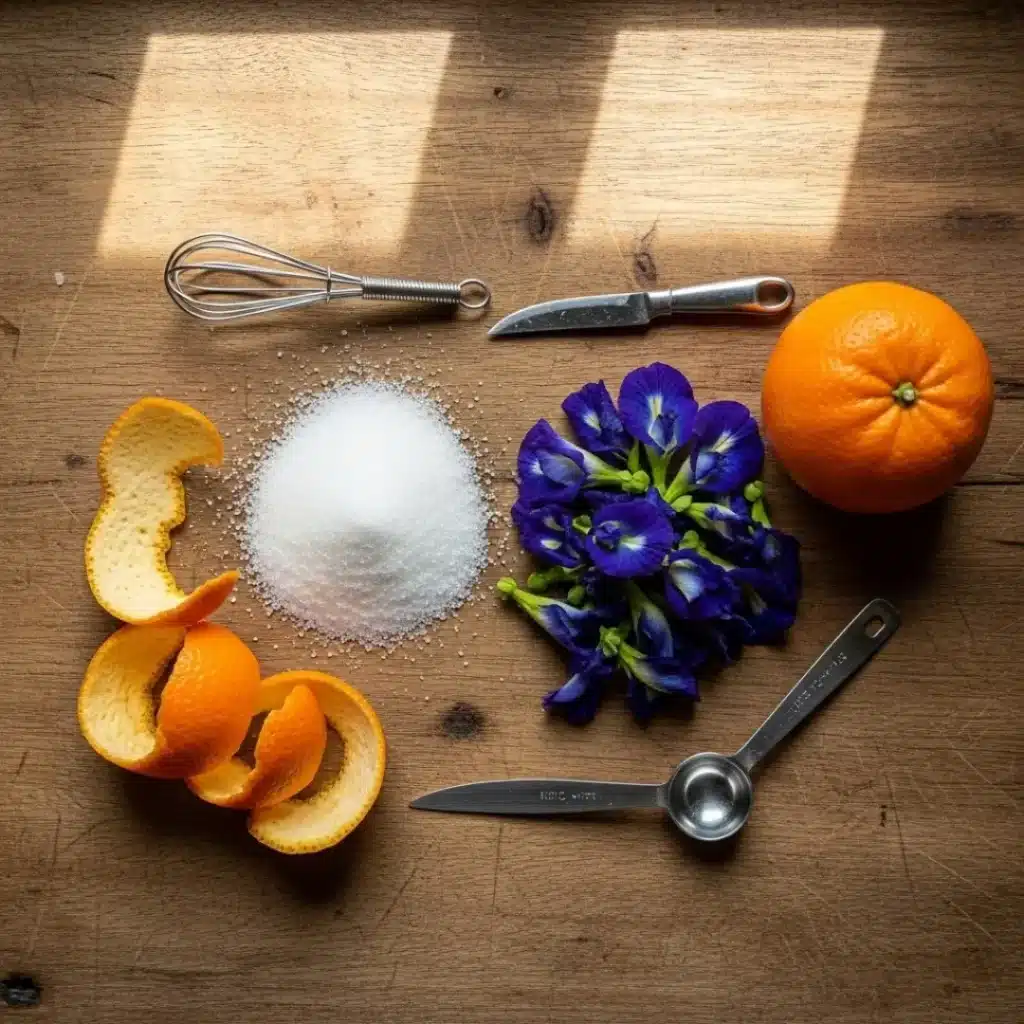
At its core, Blue Curacao syrup gets its flavor from orange peel specifically, the oils and essence from the rind rather than the juice. In commercial versions, this usually comes from orange extract or natural orange flavoring. In homemade versions (more on that later), it comes from steeping actual orange zest in sugar water.
The taste isn’t sweet like orange juice it’s more complex. Think orange marmalade with a hint of bitterness, or the scent of orange peel when you scratch it with your fingernail. It’s bright, citrusy, and slightly tangy.
When I first tasted it straight from the bottle (yes, I did this), I was surprised by how much it actually tasted like real oranges. Not candy. Not artificial. Just concentrated citrus.
The Blue Debate
Here’s where things get interesting and where my grandmother’s skepticism was completely valid. That electric blue color? It comes from food-grade dye, usually Blue No. 1 (Brilliant Blue FCF). Some brands use natural alternatives like spirulina or butterfly pea flower, but most commercial versions rely on synthetic coloring.
Is it necessary? No. The flavor would be exactly the same if it were clear or amber like the original liqueur. But the color is part of what makes it fun it’s what transforms ordinary lemonade into something that feels like a beach vacation.
When I explained this to my grandmother, she said, “So you’re drinking food coloring for fun.”
“Basically,” I admitted. “But it’s the same dye that’s in blue raspberry popsicles. And you let me eat those as a kid.”
She couldn’t argue with that logic.
If you want complete control over what goes into your glass, making your own Blue Curacao syrup at home is surprisingly simple. You steep orange peels in simple syrup, add orange extract, and finish with a drop or two of food coloring or skip the color entirely if you prefer. It’s customizable, cleaner, and honestly, it tastes better than most store-bought versions.
The Alcohol Question Everyone Asks
Before I served my grandmother her first blue mocktail, she asked the question I knew was coming: “Is there alcohol in this?”
The short answer: no. Blue Curacao syrup is completely, entirely, 100% alcohol-free.
The confusion comes from the name. Because there’s a famous liqueur called Blue Curacao that absolutely does contain alcohol, people assume the syrup version does too. But they’re two different products designed for two different purposes.
The liqueur is for cocktails it’s what bartenders use in drinks like margaritas or Blue Hawaiians. The syrup is for everyone else kids, pregnant women, people who don’t drink, or anyone who just wants the flavor without the spirits.
When I assured my grandmother there was zero alcohol, she visibly relaxed. “Good,” she said. “Because I’m not day-drinking at three in the afternoon.”
If you’re ever unsure about a specific brand or product, I wrote a complete breakdown of the alcohol question that covers commercial brands, homemade versions, and how to check labels.
When You Can’t Find It (Or Don’t Want to Buy It)
Not every grocery store carries Blue Curacao syrup. And even when they do, you might not love what’s on the label. The good news? You can make a substitute at home in about ten minutes.
Combine equal parts water and sugar in a saucepan, heat until the sugar dissolves, then stir in orange extract and a drop of blue food coloring. That’s it. You’ve just made your own version minus the mystery additives and with complete control over sweetness.
I started doing this after my third or fourth bottle, once I realized how simple the recipe actually was. My grandmother approved of this approach much faster than she approved of the store-bought version. “At least now you know what’s in it,” she said.
The First Blue Drink (And Grandmother’s Reaction)
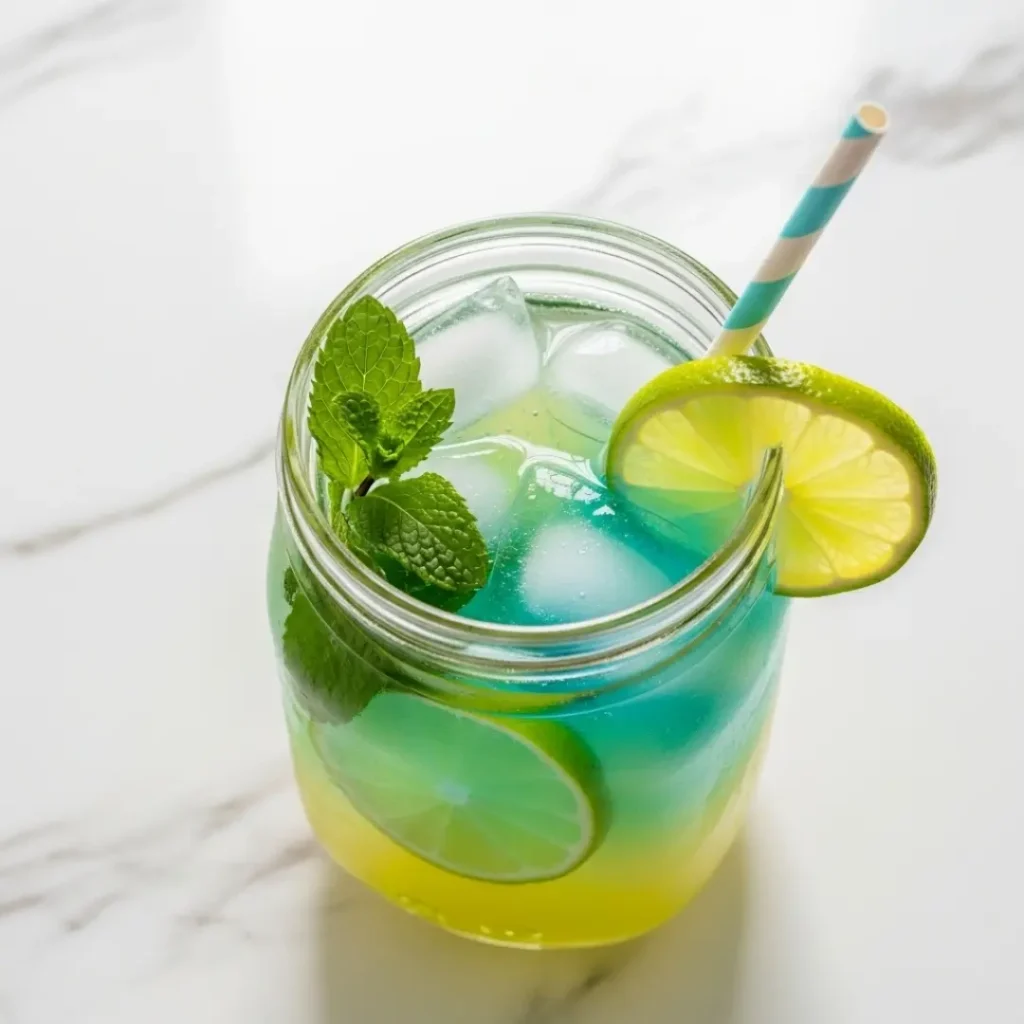
The day I finally convinced my grandmother to try a drink made with Blue Curacao syrup, I kept it simple. I wasn’t going to start with anything too elaborate just fresh-squeezed lemonade, ice, and a tablespoon of the syrup stirred in until the whole glass turned that unmistakable shade of tropical blue.
She looked at it like I’d just handed her a chemistry experiment.
“This is what you’ve been defending?” she asked.
“Just try it,” I said.
She took a small sip. Then another. Then she set the glass down and said, with obvious reluctance, “It tastes like real oranges.”
From my grandmother, that was basically a five-star review.
How It Actually Shows Up in Real Kitchens
Once my grandmother gave her begrudging approval, I started experimenting with Blue Curacao syrup in ways that actually fit my life not just Instagram-worthy drinks, but everyday uses that made sense.
In mocktails: This is where it shines brightest. Mix it with sparkling water and lime for a simple spritzer. Stir it into lemonade for kids’ parties. Combine it with pineapple juice and coconut water for something that tastes like vacation. I’ve made dozens of Blue Curacao mocktail recipes, and the syrup works in almost all of them.
Some of my favorites that have become regular summer staples: Blue Lagoon Spritzer (sparkling and citrusy), Ocean Fizz (lemon-lime base with mint), and Caribbean Lemonade (the one my grandmother actually requests now).
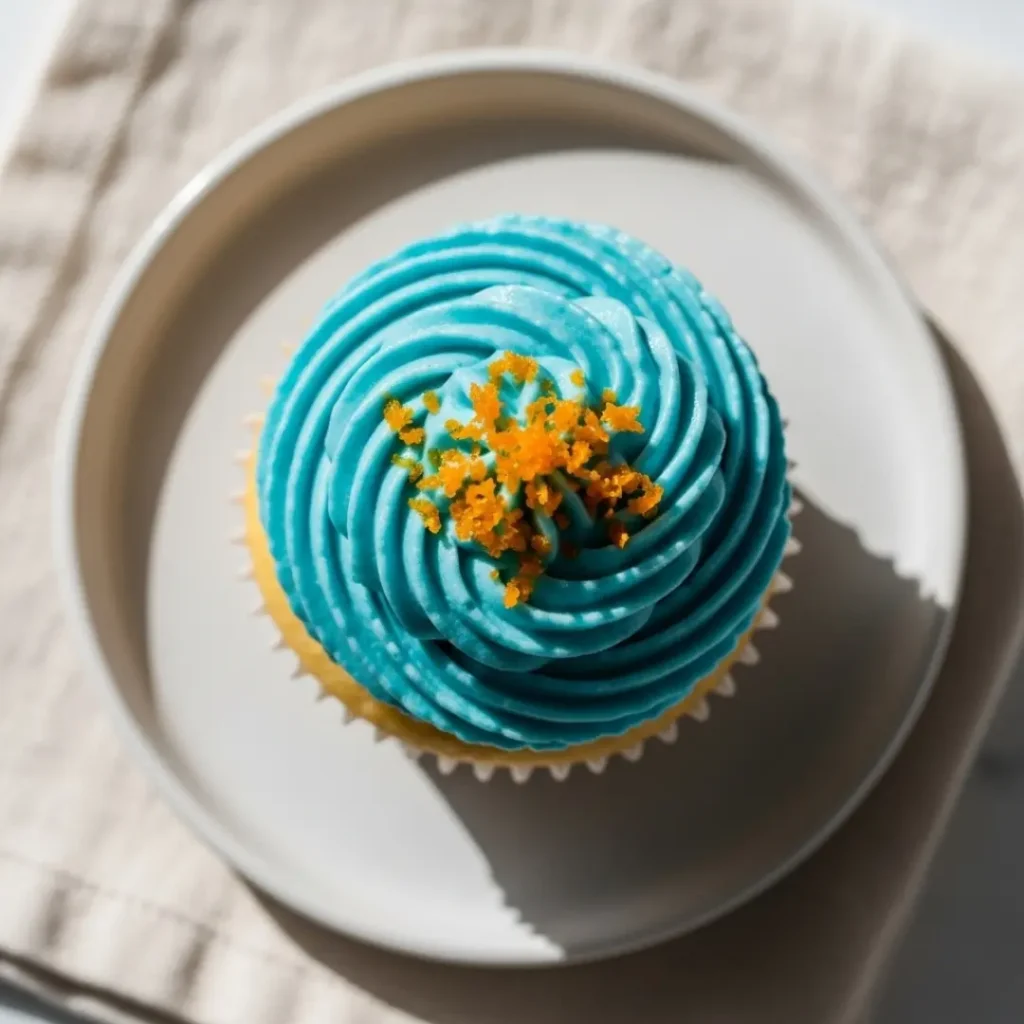
In desserts: Yes, you can absolutely use it here. I’ve drizzled it over vanilla ice cream, folded it into cream cheese frosting, and even used it as a soak for citrus cakes. It pairs beautifully with vanilla, lemon, and berry flavors. The color might look dramatic, but the taste is subtle just a whisper of orange that brightens whatever it touches.
In summer punches: When you’re making drinks for a crowd baby showers, backyard barbecues, kids’ birthday parties Blue Curacao syrup is your secret weapon. It turns a basic punch bowl into something people remember. And because it’s alcohol-free, everyone can enjoy it.
For larger gatherings, I love making Sparkling Curacao Punch it’s citrusy, fizzy, and looks absolutely stunning in a glass pitcher.
A Little Goes a Long Way
One thing I learned quickly: you don’t need much. A tablespoon is usually enough to flavor and color an entire glass of lemonade or sparkling water. Start with less than you think you need, then add more if you want it stronger.
I made the mistake once of dumping three tablespoons into a single glass, and it tasted like I was drinking liquid candy. My grandmother watched me pour it out and said, “That’s what happens when you don’t measure.”
She was right. As usual.
How Blue Curacao Syrup Compares to Other Citrus Syrups
After a few months of using Blue Curacao syrup regularly, I started wondering: is this actually different from regular orange syrup? Or am I just paying for blue food coloring?
Turns out, there are real differences and understanding them helped me figure out when to use what.
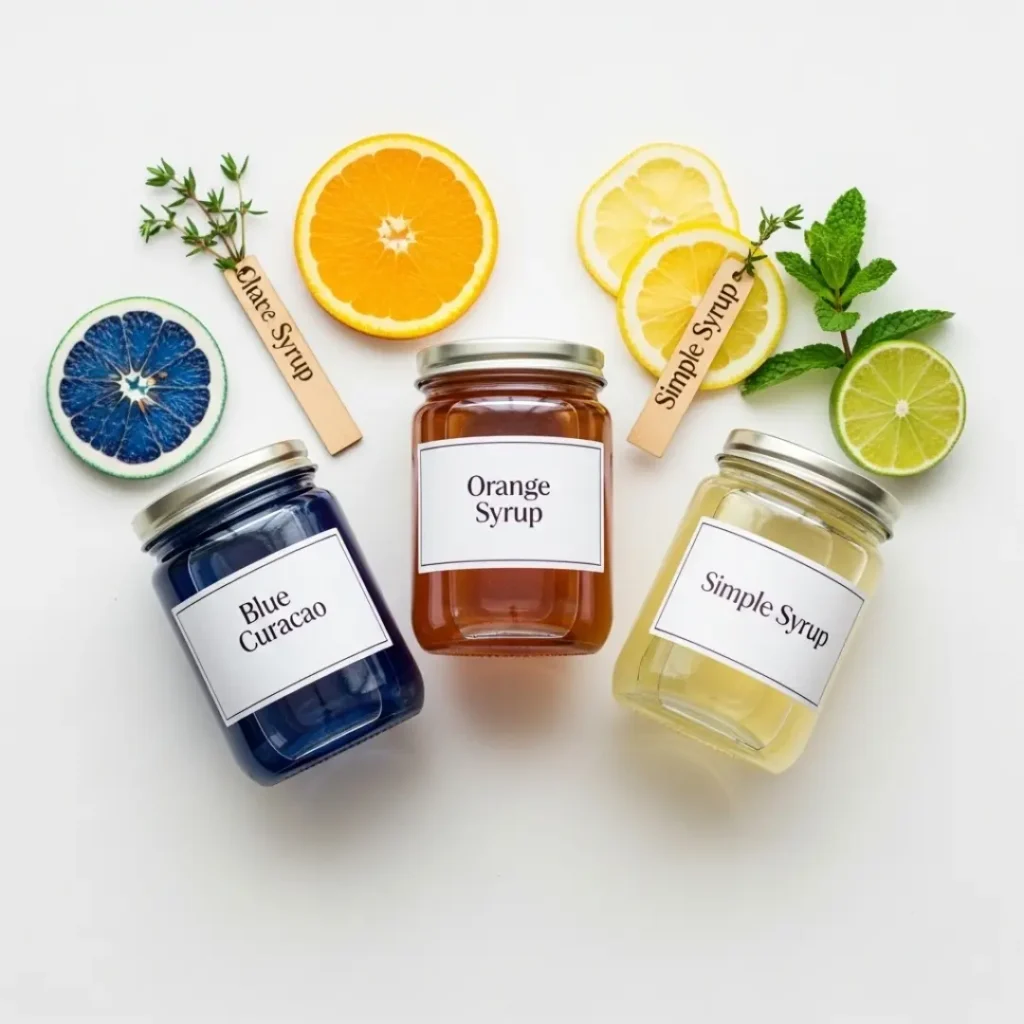
Blue Curacao vs Triple Sec
Triple Sec is a clear, alcoholic orange liqueur used in cocktails like margaritas and cosmopolitans. It’s sharper and drier than Blue Curacao syrup, with a more pronounced bitter orange note. The syrup version mimics that flavor profile but skips the alcohol entirely making it perfect for family-friendly drinks.
If you’re trying to decide between them, think about your audience. Triple Sec is for adults-only gatherings. Blue Curacao syrup is for everyone. I wrote a full comparison of Blue Curacao vs Triple Sec that breaks down flavor, uses, and when to choose which one.
Blue Curacao vs Regular Orange Syrup
Regular orange syrups the kind you’d find next to the coffee flavorings are usually made from orange juice concentrate or artificial flavoring. They’re sweet, clear, and one-dimensional.
Blue Curacao syrup is more complex. It’s made from orange peel essence rather than juice, which gives it a deeper, more layered flavor. There’s bitterness alongside the sweetness, a slight tang from citric acid, and that unmistakable orange-zest aroma.
And yes, there’s the color. But even if you made it without the blue dye, the flavor would still be different richer, more interesting, and more versatile in recipes.
My grandmother summed it up perfectly after tasting them side by side: “The regular one tastes like orange candy. This one tastes like someone actually used an orange.”
The Moment Grandmother Changed Her Mind
Three months after I first introduced Blue Curacao syrup to my grandmother, she called me on a Saturday afternoon and said, “Can you bring that blue bottle when you come over tomorrow?”
I almost dropped the phone.
“You want me to bring the syrup?” I asked, just to make sure I’d heard correctly.
“I’m making lemonade for book club,” she said. “And I think they’d like it.”
That’s how I knew I’d won. Not because she admitted she was wrong my grandmother would never say those words out loud. But because she’d decided on her own that this bright blue syrup, this “unnatural” ingredient she’d questioned from the start, was worth sharing with people she cared about.
The next day, I watched her pour Blue Curacao into a pitcher of fresh lemonade, stir it slowly, and carry it to her dining room table like it was the most natural thing in the world. Her friends loved it. They asked for the recipe. And my grandmother, without a hint of reluctance, told them exactly where to find it.
“My granddaughter introduced me to this,” she said. “It’s surprisingly good.”
From her, that was everything.
How to Store It (And How Long It Actually Lasts)
One practical question my grandmother asked early on: “How long does this stuff keep?”
Good question. Because unlike fresh ingredients that spoil quickly, Blue Curacao syrup is shelf-stable but only if you store it correctly.
Commercial bottles, like Torani or Monin, typically last 6-12 months once opened if you keep them sealed and stored in a cool, dry place. Refrigeration isn’t required, but it can help preserve the flavor longer, especially in hot climates.
Homemade versions are different. Because they don’t have preservatives, they only last about 2-3 weeks in the refrigerator. Always store homemade syrup in a clean glass bottle with a tight-fitting lid, and check for any changes in smell, texture, or color before using.
If you’re wondering about specifics like whether that bottle you bought six months ago is still good I wrote a detailed guide on how long Blue Curacao syrup lasts that covers commercial brands, homemade versions, and signs of spoilage.
⚠️ A Note Before You Mix
This article explores the story and flavor behind Blue Curacao syrup a colorful ingredient I love using in alcohol-free recipes. It’s all about fun and flavor, not health claims. As always, check your ingredient labels if you have allergies or dietary restrictions, and remember that I’m not a doctor or dietitian just someone who believes that food should bring joy alongside nourishment.
Your Questions About Blue Curacao Syrup, Answered
Can kids drink mocktails with Blue Curacao syrup?
Yes Blue Curacao syrup is completely alcohol-free, making it a safe, fun option for children’s drinks. It adds color and citrus flavor without any of the concerns tied to the original liqueur. Just keep an eye on sugar content if you’re serving it regularly, and consider making your own version if you want full control over sweetness.
Does Blue Curacao syrup have alcohol in it?
No. Blue Curacao syrup contains zero alcohol. It’s often confused with Blue Curacao liqueur, which does contain alcohol, but the syrup version is specifically made for non-alcoholic recipes. If you want to dive deeper into this question, I wrote a complete guide about Blue Curacao and alcohol content.
What does Blue Curacao flavoring taste like?
It tastes like bright, slightly tangy orange think orange zest rather than orange juice. There’s a subtle bitterness that comes from the orange peel essence, which gives it depth even when used in sweet recipes. My grandmother described it as “surprisingly like real oranges,” which I think captures it perfectly.
What does Blue Curacao Torani syrup taste like?
Torani’s version captures that same orange-peel flavor but leans a little sweeter and smoother than homemade versions. It’s designed to balance beautifully with sparkling water, lemonade, or tea, and the thicker consistency makes it great for layered drinks. It’s my go-to when I’m buying rather than making from scratch.
What is a substitute for Curacao syrup?
If you’re out of Blue Curacao syrup, mix together homemade simple syrup, a few drops of orange extract or fresh orange zest, and a drop of blue food coloring. The flavor won’t be identical, but it’ll get you close and you’ll know exactly what’s in it.
How long does Blue Curacao syrup last once opened?
Commercial bottles like Torani or Monin last 6-12 months once opened if stored properly in a cool, dry place. Homemade versions only last about 2-3 weeks in the refrigerator. For more details on storage and shelf life, check out my guide on how long Blue Curacao syrup lasts.
What I Learned From a Bottle of Blue Syrup
Looking back, the whole Blue Curacao saga taught me something I hadn’t expected: sometimes the ingredients that look the least “natural” can still have a place in a kitchen that values real food.
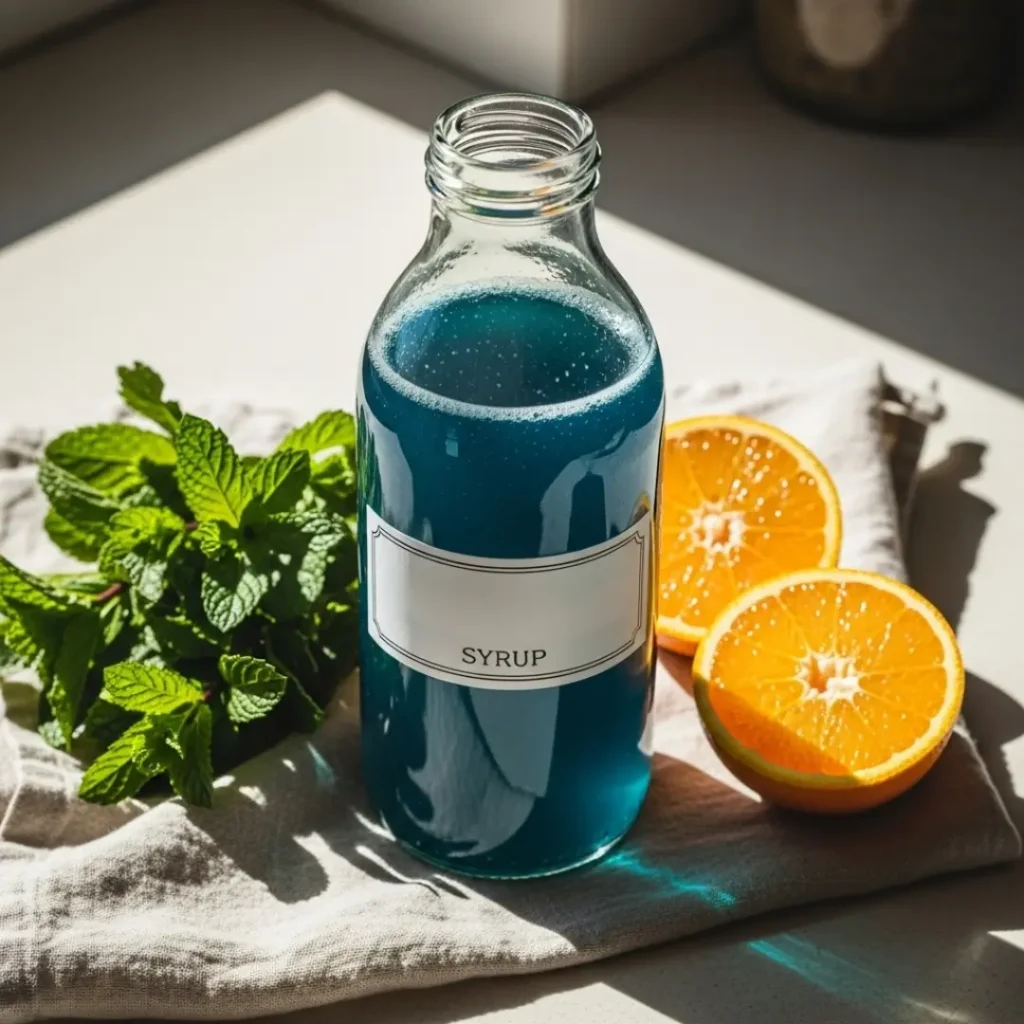
My mother taught me to read labels and understand what goes into my body. My grandmother taught me that food should connect us to tradition and heritage. And Blue Curacao syrup? It taught me that joy matters too.
Not every ingredient needs centuries of history behind it. Not every recipe needs to be ancient or pure or perfectly aligned with what our ancestors ate. Sometimes, a bottle of bright blue syrup that makes kids smile and adults feel like they’re on vacation is exactly what a kitchen needs.
What is Blue Curacao syrup, really? It’s citrus bottled in blue. It’s the ingredient that made my grandmother question everything, then quietly add it to her book club lemonade three months later. It’s fun, functional, and completely alcohol-free perfect for anyone who wants a little tropical brightness without the booze.
If you’re ready to try it yourself, start with something simple lemonade, sparkling water, or one of the Blue Curacao drink recipes I’ve gathered here on the blog. Make it at home if you want full control, or grab a bottle from the store if you just want to see what all the fuss is about.
Either way, I promise it tastes like real oranges.
My grandmother would tell you that herself if she weren’t too busy making another pitcher of blue lemonade.
Want more colorful, joyful recipes that actually work with real life? I share new ideas, kitchen experiments, and behind-the-scenes stories from my Nashville kitchen on my Facebook page. Come join me I’d love to have you there.
With love and bright glasses,
– Olivia