
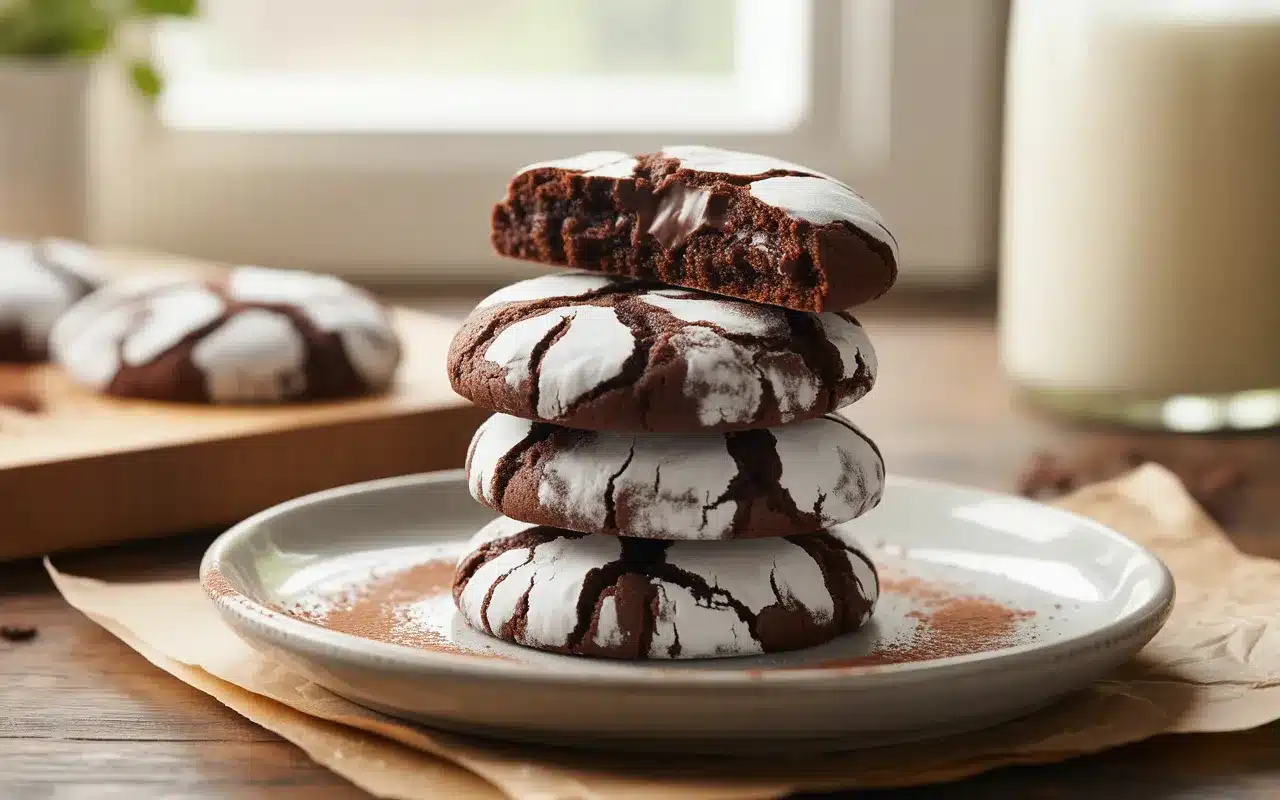
The first time my grandmother Dalida made chocolate crinkle cookies in front of me, I was nine years old and convinced she was doing magic. She’d pull these dark, mysterious balls of chocolate dough from the fridge, roll them in powdered sugar until they looked like snowballs, and somehow somehow they’d come out of the oven with these beautiful cracks that looked like winter tree branches against fresh snow.
“Olivia,” she said in that knowing way of hers, “the secret isn’t in what you add. It’s in what you leave out and how long you wait.”
I didn’t understand what she meant then. But after years of making these cookies in my Nashville kitchen and plenty of flat, sad attempts that looked nothing like hers I finally figured it out. This chocolate crinkle cookies recipe isn’t about fancy ingredients or complicated techniques. It’s about patience, the right balance of fat and cocoa, and understanding that sometimes the best things come from letting dough rest overnight.
Quick Summary: This chocolate crinkle cookies recipe creates deeply chocolatey, fudgy-centered cookies with distinctive powdered sugar cracks. The key difference from most recipes? We use melted butter instead of oil, add espresso powder for depth, and refrigerate the dough for at least 8 hours (preferably overnight) for cookies that actually crinkle instead of spreading into flat puddles.
What Makes These Chocolate Crinkle Cookies Different
Here’s what I learned after making batch after disappointing batch: most chocolate crinkle cookies recipes use vegetable oil to keep the dough soft and easy to work with. But oil doesn’t give you the structure you need for those gorgeous cracks. It also creates a greasier mouthfeel that doesn’t feel quite right.
My grandmother’s version used melted butter cooled just enough that it wouldn’t cook the eggs when mixed. The butter solidifies during the long refrigeration, which creates a firmer dough that holds its shape better in the oven. That firmness is what allows the surface to crack dramatically as the inside expands with heat.
The other secret? A full tablespoon of instant espresso powder. My mom Julia, who approached cooking with her clinical health mindset, explained it to me this way: “Chocolate and coffee both contain compounds that enhance each other’s flavor perception. You’re not making coffee cookies you’re making chocolate taste more like itself.”
She was right. The espresso doesn’t make these taste like coffee. It makes them taste intensely, almost impossibly chocolatey. Like the difference between hot cocoa made with water versus hot cocoa made with whole milk it’s a depth thing.
If you’re curious about other cookie techniques that create beautiful textures, check out my soft and chewy gingerbread cookies for another example of how chilling time affects the final result.
Ingredients for the Best Chocolate Crinkle Cookies
These cookies use ingredients you probably already have, but the proportions and techniques matter more than you’d think.
What You’ll Need:
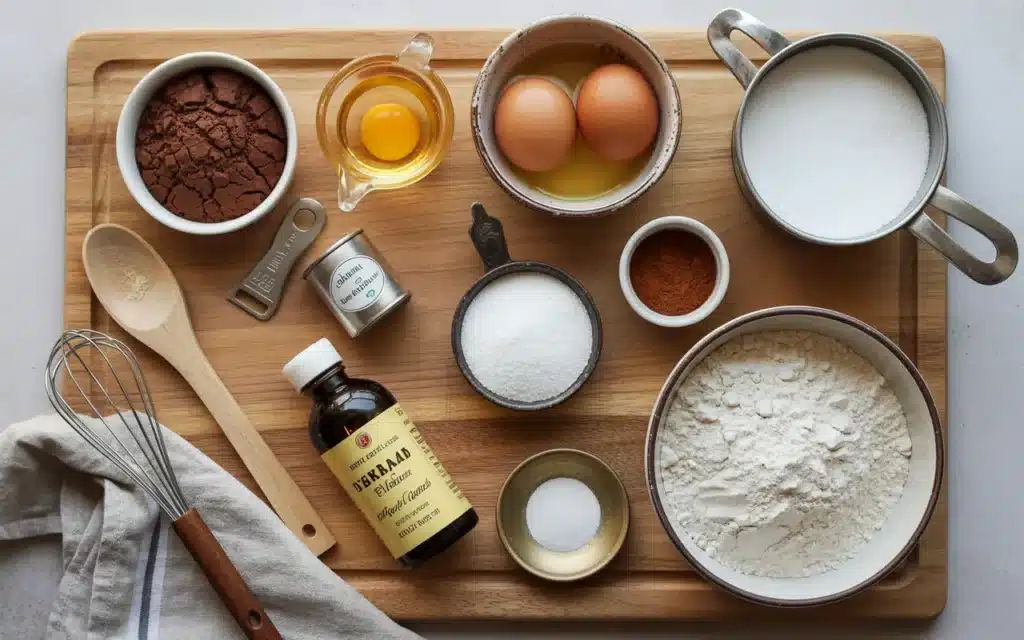
- 1 cup (200g) granulated sugar – for sweetness and structure
- ½ cup (110g) unsalted butter, melted and cooled – this is crucial; don’t substitute with oil
- 2 large eggs, room temperature – cold eggs won’t emulsify properly with the butter
- 2 teaspoons vanilla extract – pure vanilla makes a difference here
- 1 tablespoon instant espresso powder – this is the secret weapon
- ¾ cup (65g) unsweetened cocoa powder – use Dutch-process for deeper color and flavor
- 1 cup (125g) all-purpose flour – measured correctly by spooning and leveling
- 1 teaspoon baking powder – helps create lift and those signature cracks
- ¼ teaspoon salt – balances the sweetness
- ⅔ cup (80g) powdered sugar – for rolling; you’ll need this much for coating
A Note on Cocoa Powder: I use Dutch-process cocoa because it’s been treated with an alkalizing agent that reduces acidity and creates a darker, more mellow chocolate flavor. Natural cocoa powder works too, but your cookies will be slightly lighter in color and have a sharper chocolate taste. Neither is wrong just different.
How to Make Chocolate Crinkle Cookies Step-by-Step
Chocolate Crinkle Cookies Recipe
Ingredients
Equipment
Method
- Mix Wet Ingredients: In a large mixing bowl, whisk together granulated sugar and melted butter until smooth (butter should be cooled to just barely warm). Add eggs one at a time, whisking well after each addition. Stir in vanilla extract and espresso powder until fully combined. Mixture should look glossy.
- Combine Dry Ingredients: In a separate bowl, sift together cocoa powder, flour, baking powder, and salt. This prevents lumps and ensures even distribution.
- Bring Dough Together: Add dry mixture to wet ingredients in two additions, stirring gently with a wooden spoon or rubber spatula until just combined. Don’t overmix. Dough will be thick, sticky, and very dark.
- Chill Overnight: Cover bowl tightly with plastic wrap and refrigerate for at least 8 hours, preferably overnight. This step is crucial for proper texture and crinkles. Don’t skip it!
- Prepare to Bake: Preheat oven to 350°F (175°C). Line two baking sheets with parchment paper. Place powdered sugar in a shallow bowl.
- Shape and Coat: Using a cookie scoop or tablespoon, portion dough into 1½-tablespoon balls (24 total). Roll each portion into a ball with slightly damp hands, then roll generously in powdered sugar until completely coated. Don’t be shy with the sugar – you want a thick coating.
- Bake: Place sugar-coated dough balls on prepared baking sheets, spacing them about 2 inches apart. Bake for 10-12 minutes. Cookies should look slightly underdone with soft centers and visible cracks forming. They’ll continue to set as they cool.
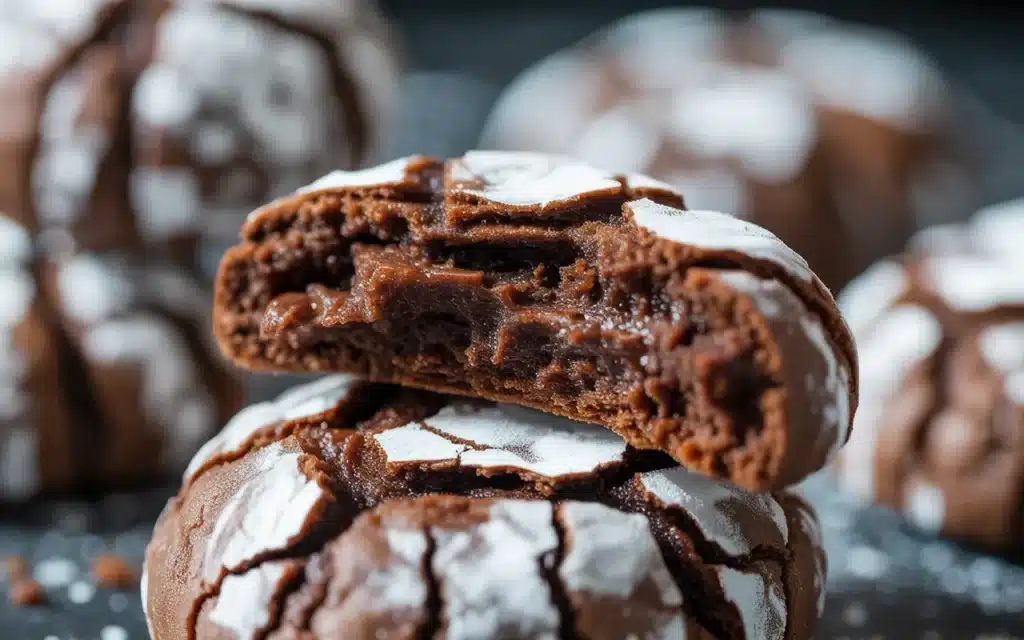
- Cool: Let cookies cool on baking sheet for 5 minutes, then transfer to a wire rack to cool completely. The outside will crisp up while the inside stays fudgy.
Nutrition
Notes
- Melted Butter vs. Oil: Butter creates better structure for dramatic cracks. Oil makes cookies spread and lose their shape.
- Espresso Powder: Enhances chocolate flavor without adding coffee taste. Can substitute with 2 tbsp strong brewed coffee (reduce vanilla to 1 tsp) or omit and add 1 extra tbsp cocoa powder.
- Overnight Chill: Essential for proper texture and crinkles. Minimum 8 hours, up to 2 days is fine.
- Room Temperature Eggs: Emulsify better with melted butter. Place in warm water for 5 minutes if forgotten.
- Room Temperature: Store in airtight container for up to 5 days. Actually taste better the next day!
- Freeze Baked Cookies: Freeze for up to 3 months. Thaw at room temperature for 20 minutes.
- Freeze Dough: After overnight chill, roll into balls and freeze on baking sheet. Transfer to freezer bag for up to 3 months. Bake from frozen (add 1-2 minutes), rolling in powdered sugar just before baking.
- Cookies Spread Flat: Dough not chilled long enough or butter was too warm when mixed.
- No Cracks: Not enough powdered sugar coating or oven temperature too low.
- Dry Texture: Overbaked or too much flour (use spoon-and-level method).
- Too Sweet: Increase salt to 1/2 tsp and ensure using unsweetened cocoa powder.
Tried this recipe?
Let us know how it was!The process is straightforward, but timing matters. Don’t skip the overnight rest I promise it’s worth the wait.
Step 1: Mix the Wet Ingredients
In a large mixing bowl, whisk together the granulated sugar and melted butter until smooth. Make sure your butter has cooled for about 10 minutes after melting you want it liquid but not hot. If it’s too warm, it’ll cook the eggs when you add them.
Add the eggs one at a time, whisking well after each addition. Then stir in the vanilla extract and espresso powder. The mixture should look glossy and well combined, almost like a thick chocolate sauce.
Step 2: Combine the Dry Ingredients
In a separate bowl, sift together the cocoa powder, flour, baking powder, and salt. Sifting matters here because cocoa powder tends to clump, and you don’t want pockets of dry cocoa in your finished cookies.
My grandmother never owned a fancy sifter. She’d just use a fine-mesh strainer and tap it gently over the bowl. Works perfectly.
Step 3: Bring It All Together
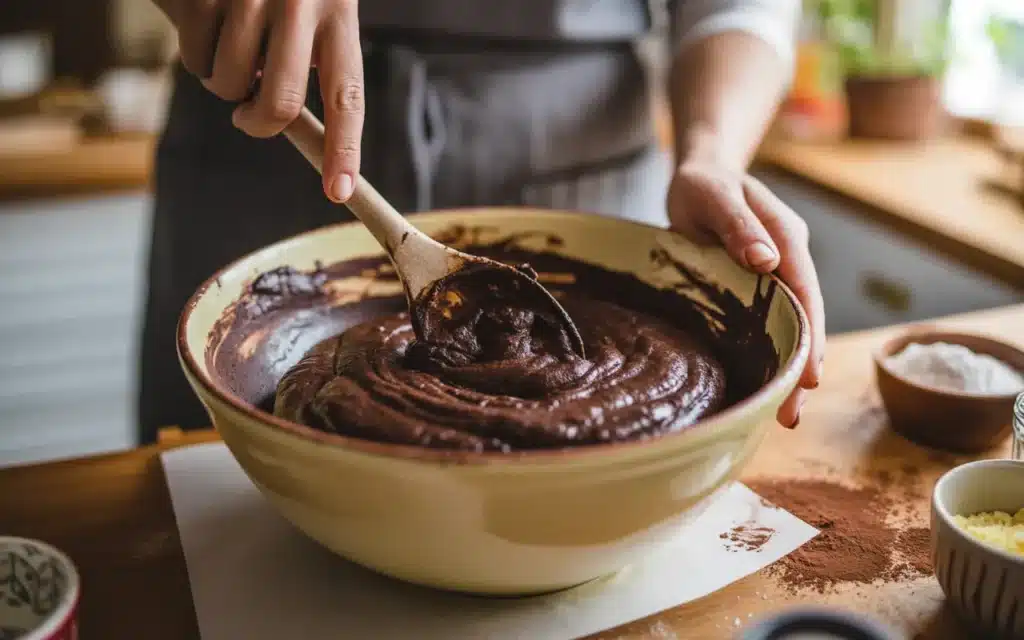
Add the dry mixture to the wet ingredients in two additions, stirring gently with a wooden spoon or rubber spatula. Don’t overmix you just want the flour incorporated. The dough will be thick, sticky, and very dark.
This is where it gets hard: cover the bowl tightly with plastic wrap and refrigerate for at least 8 hours, but preferably overnight. I usually make the dough after dinner and bake the next afternoon.
Why the long chill? Two reasons. First, it allows the flour to fully hydrate, which creates a more cohesive dough. Second, it firms up the butter so the cookies hold their shape when they hit the heat of the oven. Without this step, your cookies will spread thin and won’t develop those dramatic cracks.
Step 4: Shape and Coat
When you’re ready to bake, preheat your oven to 350°F (175°C) and line two baking sheets with parchment paper.
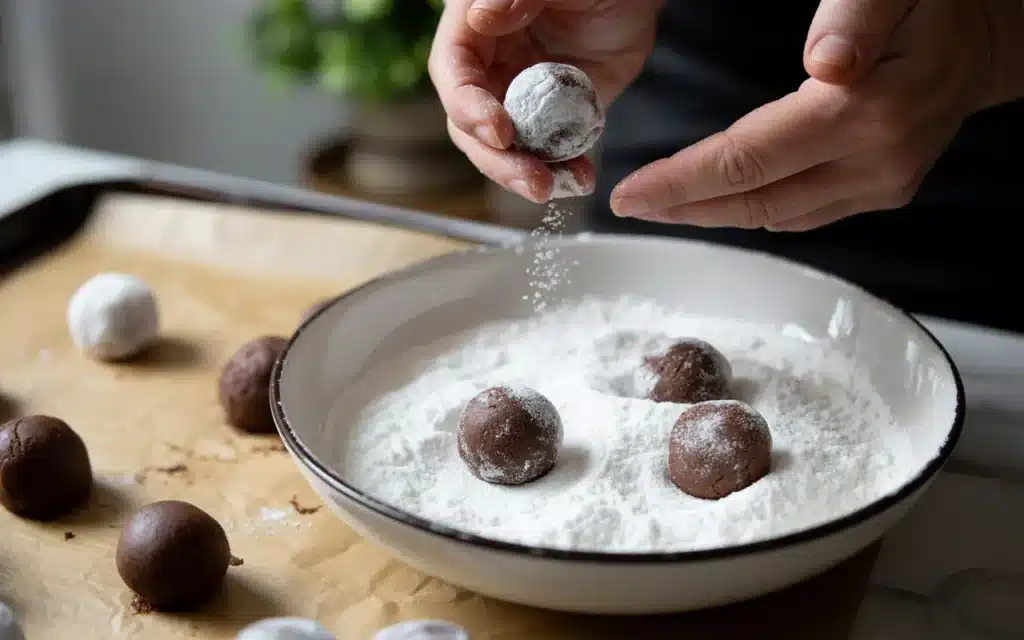
Place the powdered sugar in a shallow bowl. Using a cookie scoop or tablespoon, portion out dough balls about 1½ tablespoons each. Roll each portion into a ball with your hands (slightly damp hands help if the dough is sticky), then roll generously in the powdered sugar until completely coated.
Don’t be shy with the sugar you want a thick coating. This is what creates the white “snow” that cracks beautifully as the cookies bake.
Step 5: Bake and Cool
Place the sugar-coated dough balls on your prepared baking sheets, spacing them about 2 inches apart. They’ll spread a bit, but not dramatically if you’ve chilled your dough properly.
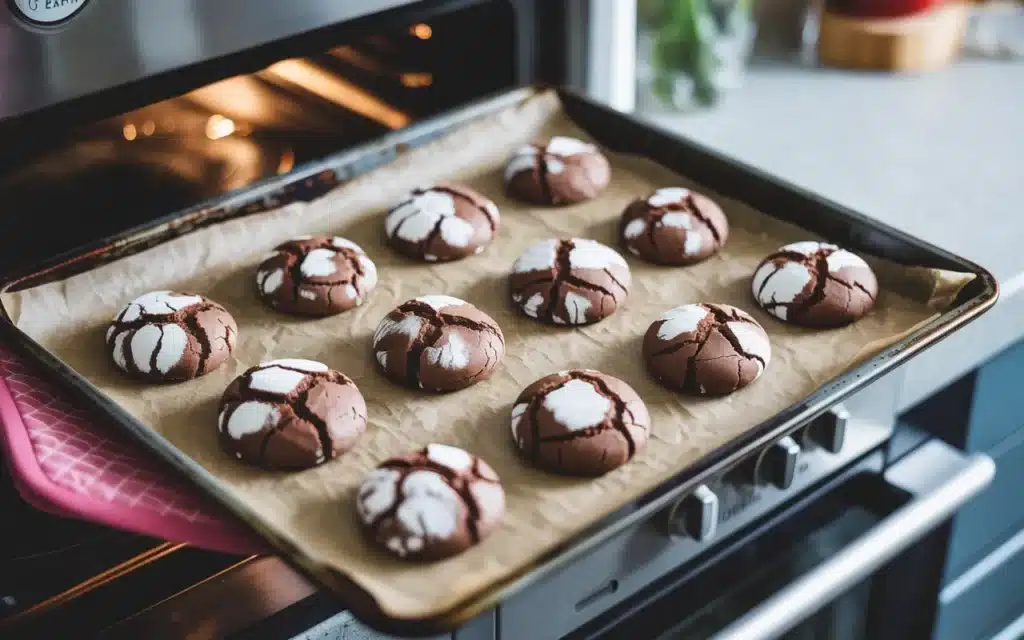
Bake for 10-12 minutes. Here’s the tricky part: the cookies will look slightly underbaked when you pull them from the oven. The centers should still be soft, and the cracks should be just starting to form. That’s exactly what you want. They’ll continue to set as they cool on the baking sheet.
Let them cool on the baking sheet for 5 minutes, then transfer to a wire rack. As they cool completely, the outside will crisp up while the inside stays fudgy. It’s the perfect contrast.
If you love cookies with contrasting textures, you might also enjoy my chocolate chip cookie brownies that combine two textures in one dessert.
Tips for Perfect Crinkles Every Time
I’ve made these cookies at least fifty times over the years. Here’s what I’ve learned through trial, error, and one memorable Christmas where I had to remake an entire batch at midnight because I rushed the process.
Don’t Skip the Overnight Rest
I know I keep saying this, but it’s the single most important factor. I once tried to bake these after just 2 hours in the fridge because I was impatient. They spread into flat, sad circles with barely any cracks. Learn from my mistake.
Use Room Temperature Eggs
Cold eggs don’t emulsify as easily with the melted butter, which can create a grainy texture. If you forget to take them out ahead of time, place them in a bowl of warm (not hot) water for 5 minutes. Works like a charm.
Roll in Powdered Sugar Right Before Baking
Don’t roll all your cookies in sugar and let them sit. The sugar will start to dissolve into the dough, and you won’t get those crisp white cracks. Roll a batch, bake it, then roll the next batch while the first one cools.
Measure Your Flour Correctly
Too much flour makes the cookies dry and cakey instead of fudgy. Spoon flour into your measuring cup and level it off with a knife don’t scoop directly from the bag, which packs the flour down and gives you too much.
Watch Your Baking Time
Every oven is different. Mine runs a bit hot, so I bake these for 10 minutes exactly. If yours runs cool, you might need the full 12 minutes. The cookies should look set around the edges but still soft in the center when you pull them out.
Variations and Flavor Ideas
Once you’ve mastered the basic recipe, there are a few ways to make it your own without losing that signature texture.
Peppermint Chocolate Crinkles
Add ½ teaspoon peppermint extract along with the vanilla. These taste like those chocolate-mint cookies you get at fancy restaurants, but better. Perfect for holiday cookie exchanges.
Orange Chocolate Crinkles
Replace the vanilla extract with 1 teaspoon orange extract, and add 1 tablespoon finely grated orange zest to the dough. The brightness of orange against deep chocolate is incredible.
Double Chocolate Crinkles
Fold in ½ cup of mini chocolate chips after mixing the dough. They’ll create little pockets of melted chocolate throughout. Just be warned these are dangerously rich.
Cinnamon-Spiced Crinkles
Add 1 teaspoon ground cinnamon and ¼ teaspoon cayenne pepper to the dry ingredients. It’s subtle warmth that reminds me of Mexican hot chocolate. My grandmother would have loved this version.
For more holiday cookie inspiration with warm spices, try my gingerbread crinkle cookies that use a similar rolling and cracking technique.
Storage and Make-Ahead Tips
One of the best things about these chocolate crinkle cookies is how well they keep. They actually taste better the next day after the flavors have had time to develop.
Room Temperature Storage
Store baked cookies in an airtight container at room temperature for up to 5 days. I layer them between sheets of parchment paper to prevent sticking. The outside stays crisp, and the inside stays fudgy it’s a beautiful thing.
Freezing Baked Cookies
These freeze beautifully for up to 3 months. Let them cool completely, then freeze in a single layer on a baking sheet for 1 hour. Once frozen solid, transfer to a freezer-safe container or bag. Thaw at room temperature for about 20 minutes before serving.
Freezing Cookie Dough
Here’s my favorite make-ahead trick: after the dough has chilled overnight, roll it into balls and freeze them on a baking sheet. Once frozen, transfer to a freezer bag. When you want fresh cookies, roll the frozen dough balls in powdered sugar and bake directly from frozen, adding 1-2 minutes to the baking time.
This means you can have warm chocolate crinkle cookies any time the craving hits, with minimal effort. I keep a bag of frozen dough balls in my freezer from November through January specifically for this reason.
Common Mistakes and How to Fix Them
I’ve made every possible mistake with these cookies. Here’s what went wrong and how I fixed it.
Cookies Spread Too Flat
Problem: Your cookies turned into thin, flat discs instead of thick, crackly rounds.
Solution: This almost always means the dough wasn’t chilled long enough or your butter was too warm when you mixed it. Make sure you refrigerate for the full 8 hours minimum, and let your melted butter cool to just barely warm before adding the eggs.
No Visible Cracks
Problem: The powdered sugar stayed smooth instead of cracking.
Solution: You probably didn’t use enough powdered sugar when rolling, or the dough was too warm. Make sure you have a generous coating, and if your kitchen is very warm, chill the rolled balls for 10 minutes before baking.
Dry, Cakey Texture
Problem: The cookies are dry instead of fudgy.
Solution: You either overbaked them or used too much flour. Pull them when the centers still look slightly underdone, and make sure you’re measuring flour by the spoon-and-level method, not scooping.
Cookies Are Too Sweet
Problem: The cookies taste overly sweet.
Solution: Increase the salt to ½ teaspoon and make sure you’re using unsweetened cocoa powder, not sweetened. The salt balances the sugar and makes the chocolate flavor more complex.
Pairing Suggestions and Serving Ideas
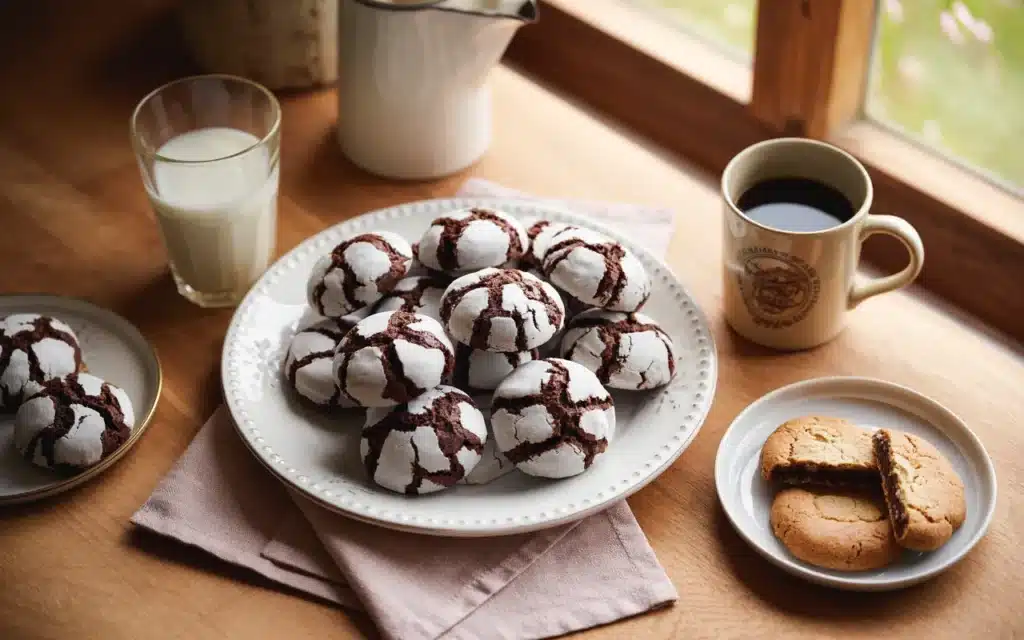
These chocolate crinkle cookies are incredible on their own, but they also shine as part of a larger spread.
For a holiday cookie platter, I like to pair them with lighter, contrasting flavors. My lemon raspberry cookies provide bright, fruity notes that balance the deep chocolate. Add some buttery spritz cookies for variety in shape and texture.
For drinks, these are perfect dunked in cold milk (obviously), but they’re also wonderful alongside my matcha white hot chocolate for a sophisticated contrast, or with strong coffee if you want to emphasize that espresso undertone.
During the holidays, I’ll serve them on the same platter as traditional Italian Christmas cookies for a mix of textures and flavors that makes everyone happy.
🩵 Note from Olivia:
This recipe is based on my grandmother’s kitchen wisdom and my own years of baking experience. While I’ve done my best to provide clear instructions and safe techniques, please remember that every oven and kitchen is different. Always follow basic food safety guidelines, and consult with a healthcare provider if you have specific dietary concerns or allergies. I’m not a professional chef or nutritionist just someone who believes that the best cookies come from patience, good ingredients, and a little bit of love.
Your Chocolate Crinkle Cookie Questions Answered
Can I use oil instead of butter in chocolate crinkle cookies?
You can, but I don’t recommend it. Oil creates a softer dough that spreads more in the oven, which means fewer dramatic cracks and a greasier texture. Melted butter (cooled slightly) gives you the structure needed for those signature crinkles while keeping the center fudgy. If you absolutely need to use oil, reduce the amount to 6 tablespoons and chill the dough for at least 12 hours instead of 8.
Why do my chocolate crinkle cookies spread flat?
This almost always comes down to temperature. Either your dough wasn’t chilled long enough (it needs a full 8 hours minimum), your butter was too warm when you mixed it, or your kitchen is very warm. Make sure the melted butter cools to just barely warm before adding eggs, and if your kitchen is over 75°F, chill the rolled dough balls for 10 minutes before baking.
Can I make chocolate crinkle cookies without espresso powder?
You can skip it, but the cookies won’t have the same depth of chocolate flavor. The espresso doesn’t make them taste like coffee it enhances the chocolate and makes it taste richer. If you don’t have espresso powder, you can substitute with 2 tablespoons of very strong brewed coffee (reduce the vanilla to 1 teaspoon to compensate for the extra liquid), or simply omit it and add an extra tablespoon of cocoa powder.
How do I know when chocolate crinkle cookies are done baking?
This is tricky because they should look slightly underbaked when you pull them from the oven. The edges should be set and the cracks should be visible, but the centers should still look soft and a little shiny. They’ll continue to cook on the hot baking sheet as they cool. If you wait until the centers look completely done, they’ll be dry and cakey instead of fudgy. For most ovens, 10-12 minutes at 350°F is perfect.
Can I freeze chocolate crinkle cookie dough?
Absolutely, and it’s one of my favorite make-ahead tricks. After chilling the dough overnight, roll it into balls and freeze them on a baking sheet until solid. Transfer the frozen dough balls to a freezer bag and store for up to 3 months. When you want fresh cookies, roll the frozen balls in powdered sugar and bake directly from frozen, adding 1-2 minutes to the baking time. This way you can have warm cookies anytime without making a whole batch.
What’s the difference between Dutch-process and natural cocoa powder?
Dutch-process cocoa has been treated with an alkalizing agent that reduces acidity and creates a darker, smoother chocolate flavor with a deeper color. Natural cocoa powder is more acidic and has a sharper, more intense chocolate taste. For chocolate crinkle cookies, I prefer Dutch-process because it gives you those gorgeous dark cookies with a mellow chocolate flavor, but natural cocoa works too your cookies will just be lighter brown and taste slightly more tangy.
Why do my cookies have no cracks?
The most common reason is not using enough powdered sugar when rolling. You want a generous, thick coating that looks almost excessive that’s what creates the dramatic white cracks. Also make sure your oven temperature is accurate (use an oven thermometer to check) and that you’re not overbaking. The cracks form as the cookie expands rapidly in the heat, so if your oven is too cool or you bake too long, they won’t develop properly.
Can I make these cookies gluten-free?
Yes, with a good 1:1 gluten-free flour blend that includes xanthan gum. I’ve successfully used Bob’s Red Mill 1:1 Gluten Free Baking Flour. The texture will be slightly different a bit more delicate but they still crinkle beautifully and taste great. Don’t use almond flour or coconut flour alone; you need a blend designed to replace all-purpose flour.
The Wisdom in Waiting
My grandmother was right about patience. The best chocolate crinkle cookies the ones with those gorgeous cracks and fudgy centers that taste like the richest hot chocolate you’ve ever had don’t come from rushing or taking shortcuts. They come from mixing a simple dough, letting it rest overnight, and trusting the process.
These days, when I make these cookies in my Nashville kitchen, I think about her standing at her counter, rolling those perfect balls of dough in powdered sugar with hands that had made these same cookies hundreds of times. She knew exactly how they’d turn out before they even went in the oven. Not because she was doing magic, but because she understood that good things really good things are worth the wait.
So make the dough tonight. Let it rest overnight. Tomorrow, when you pull those first crackled cookies from your oven and the whole house smells like deep, dark chocolate, you’ll understand exactly what she meant.
These aren’t just cookies. They’re proof that sometimes the secret to something extraordinary is simply knowing when to wait.
Made these chocolate crinkle cookies? I’d love to see how they turned out! Share your photos and any tweaks you made in the comments below. And if you’re building a holiday cookie platter, check out my full collection of Christmas cookie recipes for more inspiration.
Let’s Stay Connected on Pinterest
I share more than just recipes. I share everyday wellness ideas, simple kitchen swaps, and the kind of meals that make you feel cared for. Join me on Pinterest and save your favorites to inspire a healthier tomorrow.