Gluten free flour swap for bagels it sounds simple enough, right? Just swap the flour and keep going. But if you’ve ever stood in your kitchen, hands dusted with mystery flour blend number three, staring at what was supposed to be a bagel but looks more like a hockey puck… you know it’s not that easy.
I’ll never forget the Saturday morning I decided to surprise my family with homemade gluten-free bagels. My grandmother Dalida walked into the kitchen mid-disaster dough crumbling in my hands, flour everywhere and she just shook her head with that knowing smile. “Olivia,” she said, “when something doesn’t want to hold together, you’re missing the glue.” She was talking about baking, but honestly? That advice applies to so much more than just bagels.
Here’s what I’ve learned after more failed batches than I’d like to admit: making gluten-free bagels that actually taste like bagels chewy, golden, satisfying isn’t about finding one magic flour. It’s about understanding what gluten does, then rebuilding that structure from scratch with the right combination of flours, starches, and binders.
And the best part? Once you get it right, these bagels are so good that nobody at the breakfast table will ask if they’re gluten-free. They’ll just ask for seconds.
Let’s dig into how to make this work with real tips, a simple recipe, and the kind of practical kitchen wisdom my grandmother would actually approve of.
⚠️ Note Before You Try
This gluten-free bagel guide comes from personal kitchen experience and ingredient research, not medical training. If you’re dealing with celiac disease, gluten sensitivities, or any health concerns, please talk to your doctor or dietitian before trying new recipes. Different flour brands behave differently, so your results might vary and that’s completely normal. Be patient with yourself as you learn.
What You Need to Know About a Gluten Free Flour Swap for Bagels
Before we get into flour types and ratios, let’s talk about what makes a bagel a bagel in the first place. Because here’s the thing: when you’re doing a gluten free flour swap for bagels, you’re not just replacing wheat flour with something else. You’re trying to recreate an entire structural system that gluten builds naturally.
Traditional bagels get their signature chewy texture and golden, slightly shiny crust from high-gluten bread flour. That gluten is what gives the dough its stretch, its strength, its ability to trap air and rise, and its capacity to hold together when you boil it before baking (yes, that’s a real step and it’s not negotiable if you want authentic bagel texture).
When you remove gluten from the equation, you lose all of that natural scaffolding. Most gluten-free flours rice, oat, almond, sorghum don’t have the built-in protein structure to hold shape through mixing, rising, boiling, and baking. They just don’t have the muscle memory, so to speak.
So if you’re aiming for a successful gluten free flour swap for bagels, you’re essentially rebuilding a house without nails. It’s doable absolutely doable but you need the right tools. That means choosing flours that work together as a team, adjusting your liquid ratios, and adding binders that mimic what gluten does naturally.
What Makes Bagels So Unique?
Let’s break down what traditional bagels need, so you understand what we’re working toward:
- High-Protein Dough: Bagels use bread flour specifically because of its high gluten content. That protein creates elasticity and chew.
- Boiling Before Baking: This isn’t just for show. Boiling locks in moisture, creates that dense interior, and forms the shiny, slightly chewy crust that makes a bagel feel like a bagel.
- Slow Proofing (Optional but Wonderful): Some bakers do a cold fermentation overnight. It deepens the flavor and improves the chew. This step is optional for gluten-free versions, but it can help with texture if you have the time.
To pull all this off without gluten, we need to get strategic. That means smart flour swaps, binders that add elasticity, proper hydration, and a method that respects what makes bagels truly special. Let’s start with choosing the right flours.
Choosing the Right Gluten Free Flour Swap for Bagels
Standing in the baking aisle, staring at bags labeled “almond flour,” “sorghum flour,” “buckwheat flour,” “rice flour,” and about twelve others you’ve never heard of it’s overwhelming. I get it. But here’s the truth when it comes to a reliable gluten free flour swap for bagels: it’s not about picking the fanciest or most expensive option. It’s about understanding what your bagel dough actually needs and which flours can deliver.
Bagels aren’t cupcakes. They don’t need to be light and fluffy. They need strength. They need stretch. They need to hold their shape when you boil them and come out of the oven with that perfect chewy bite. And that’s why a single gluten-free flour no matter how good rarely works on its own.
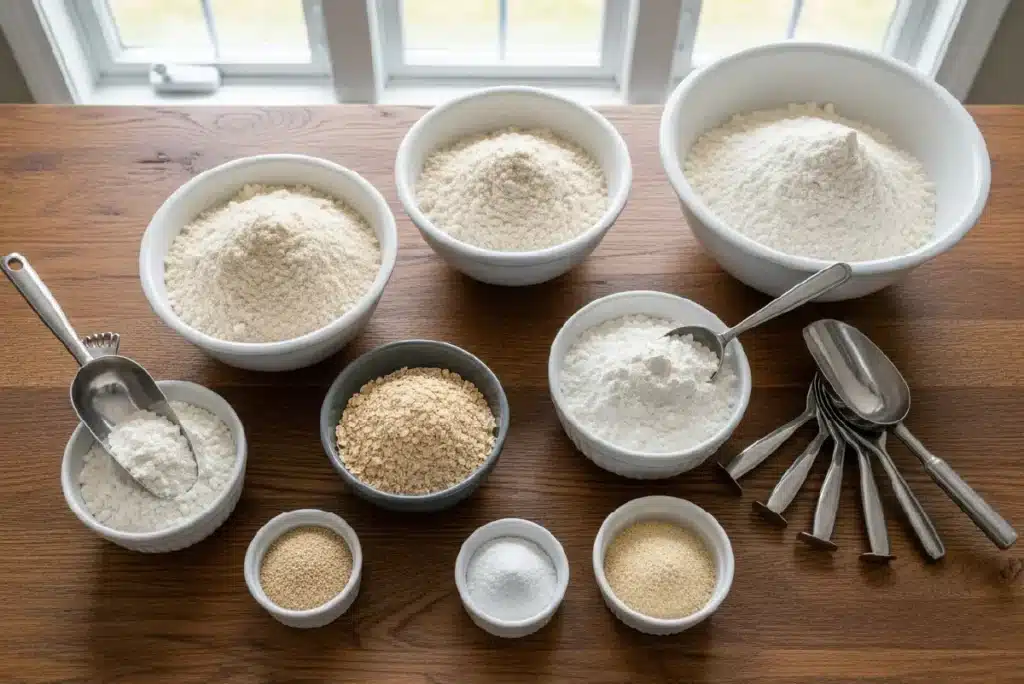
Most of the time, a blend is your best friend. Here’s what to look for:
What to Look for in a Flour Blend
- Protein Content: Flours like sorghum and oat have higher protein levels, which help create chew and structure. Rice flour is fine but tends to be lighter and less “sticky,” so it works best as part of a blend, not on its own.
- Starches for Stretch: Tapioca starch and potato starch add elasticity and a softer crumb. They’re what give your dough that slightly springy feel when you press it.
- Binders: This is the “glue” my grandmother was talking about. Xanthan gum or psyllium husk mimic gluten’s ability to hold everything together. Without them, your dough will crumble or spread instead of rising.
- Flavor Neutrality: Unless you’re going for something experimental, stick with mild-tasting flours like oat or rice for the base. Buckwheat and coconut flour have strong flavors that can overpower the simple, comforting taste of a classic bagel.
If you’re mixing your own blend at home (which I recommend once you get comfortable), here’s a simple starting formula that works beautifully:
- 1 cup sorghum flour (for protein and chew)
- ¾ cup tapioca starch (for elasticity)
- ½ cup potato starch (for softness and moisture)
- 1 tsp xanthan gum (the binder that holds everything together)
This combination gives you a dough that’s springy, boil-ready, and doesn’t taste overly “alternative.” It just tastes like a really good bagel.
Store-Bought Flour Blends Worth Trying
Now, if blending your own flours feels like too much right now especially when you’re still figuring out gluten-free baking there are some excellent store-bought options. The key is to make sure they include a binder (like xanthan gum) in the mix. Here are my tried-and-tested favorites:
- Bob’s Red Mill Gluten-Free 1-to-1 Baking Flour This is my go-to when I’m in a hurry. It includes xanthan gum and works well for bagels without any adjustments.
- King Arthur Measure for Measure Another reliable blend that behaves predictably. Great for beginners.
- Cup4Cup Gluten Free Flour Slightly more expensive, but the texture is excellent, especially if you want a softer crumb.
These work especially well if you’re baking small batches and don’t want to overthink ratios or keep five different flours in your pantry. I keep Bob’s Red Mill on hand for busy mornings when I want fresh bagels without the mental math.
Tips for a Successful Gluten Free Flour Swap for Bagels
Once you’ve got your flour blend sorted out, the real magic happens in how you use it. Swapping in a gluten free flour for bagels doesn’t just change the ingredient list it changes how the dough behaves, how it absorbs moisture, how it feels in your hands, and how it bakes.
But don’t worry. With a few thoughtful adjustments, you can turn what might start as a crumbly mess into a batch of chewy, golden, absolutely-worth-the-effort bagels. Here’s what I’ve learned through trial, error, and more than a few conversations with my grandmother about “listening to the dough.”
1. Use Binding Agents (Don’t Skip This)
Gluten is what gives traditional bagels their structure and elasticity. Without it, your dough needs a helper something that can mimic that stretchy, hold-everything-together quality. That’s where xanthan gum or psyllium husk come in.
- Use 1 tsp xanthan gum per cup of flour, or
- 1 Tbsp psyllium husk for a slightly more tender, less gummy chew
Think of these as the scaffolding that holds your dough together during boiling and baking. Without them, your bagels won’t hold their shape they’ll spread, crack, or fall apart in the water. I learned this the hard way when I thought I could skip the xanthan gum “just this once.” Spoiler: I couldn’t.
2. Increase the Hydration
Here’s something that surprised me when I first started baking gluten-free: these flours are thirsty. They absorb liquid very differently than wheat flour usually a lot more. So if your dough feels dry, stiff, or crumbly, that’s not a sign you did something wrong. It’s a sign you need to add more liquid.
- Add an extra 10–20% liquid to your recipe (start with an extra 2–3 tablespoons of water or milk)
- Let the dough rest after mixing hydration improves with time as the flours fully absorb the moisture
This rest period is especially important for flours like oat and sorghum. Give them 20–30 minutes to drink up that liquid, and you’ll notice the dough becomes easier to work with and less prone to crumbling.
3. Mix Gently But Thoroughly
With traditional wheat dough, you might knead for ten minutes to develop the gluten. With gluten-free dough, there’s no gluten to develop so overmixing just makes things gummy or tough.
Use a spoon or a stand mixer on low speed, and stop as soon as everything comes together into a cohesive dough. You want even distribution of ingredients, but you don’t want to beat the life out of it.
4. Let It Rest (This Is the Secret)
If I could give you one piece of advice that changed my gluten-free baking completely, it’s this: let your dough rest. I know it feels like an extra step when you’re already adapting a recipe, but it makes such a difference.
- After mixing, cover the dough and let it sit at room temperature for 20–30 minutes
During this time, the flours hydrate more fully, the binders start doing their job, and the dough becomes easier to shape. It goes from feeling like crumbly sand to something that actually holds together when you roll it into a ball.
My grandmother used to say that good dough needs time to “think.” I didn’t understand what she meant until I tried this rest step and saw how much smoother everything became.
Quick Reference: Flour Swap Adjustment Table
| Step | Why It Matters | Gluten-Free Tip |
|---|---|---|
| Flour Swap | Mimic protein structure | Use a custom GF blend or 1:1 mix with binders |
| Hydration Boost | GF flours absorb more liquid | Add 10–20% more water or milk |
| Binding Agent | Holds dough together | Add xanthan gum or psyllium |
| Rest Time | Improves dough handling | Let dough sit 20–30 minutes before shaping |
Simple Gluten Free Flour Swap for Bagels: A Mini Recipe
At some point, all the tips and theory in the world need to meet a mixing bowl. So if you’re wondering where to actually start, here’s a base recipe you can trust. It uses an easy gluten free flour swap for bagels that captures that chewy bite and satisfying crust without complicated steps or ingredients you’ve never heard of.
This isn’t a full-blown bakery formula it’s the kind of recipe you can make on a weeknight after work, with just enough structure to keep you confident and just enough flexibility to feel human. Because let’s be honest: if a recipe requires fifteen steps and three hours of your life, you’re probably not making it twice.
And if you’re more of a high-protein baker who wants something even faster, check out my Cottage Cheese Bagel Recipe it’s naturally gluten-friendly, packed with protein, and comes together in about 20 minutes. But for today, let’s focus on this classic gluten-free version.
Ingredients (Makes 6–8 mini bagels)
- 1 ½ cups gluten free flour blend (see tips above, or use Bob’s Red Mill 1-to-1)
- ¾ cup warm water (plus more as needed trust me, you’ll probably need it)
- 1 tbsp olive oil
- 2 tsp sugar or honey (this feeds the yeast and adds a touch of sweetness)
- 1 tsp active dry yeast
- 1 tsp xanthan gum or 1 tbsp psyllium husk (don’t skip this it’s your “glue”)
- ½ tsp salt
Instructions
- Activate the yeast: In a small bowl, mix the warm water (not hot just pleasantly warm, like bathwater), sugar or honey, and yeast. Let it sit for 5–10 minutes until it gets foamy and bubbly on top. This tells you the yeast is alive and ready to work.
- Mix the dough: In a large bowl, combine your gluten-free flour blend, salt, and xanthan gum. Stir them together so everything’s evenly distributed. Then pour in the yeast mixture and the olive oil. Mix with a spoon or your hands until a dough starts to form. If it feels too dry or crumbly, add water one tablespoon at a time until it holds together.
- Rest the dough: Cover the bowl with a clean kitchen towel and let it sit for 30 minutes. This is when the magic happens the flour absorbs the liquid, the dough becomes easier to handle, and you’ll thank yourself for being patient.
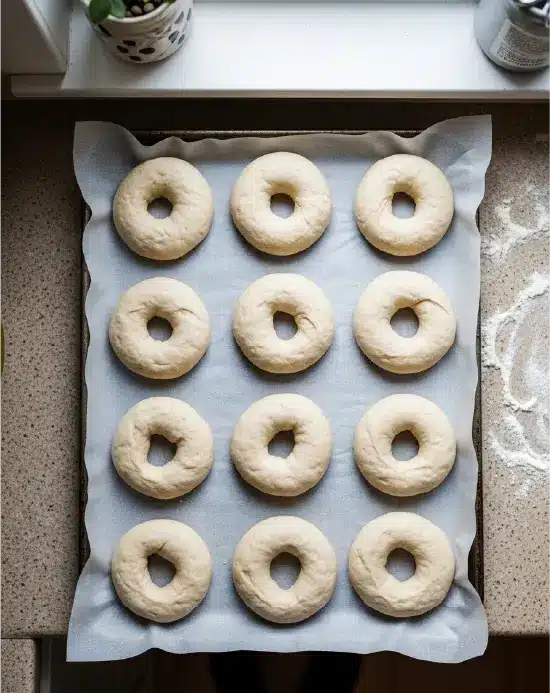
- Shape into bagels: Lightly dust your hands with a bit of flour (or wet them slightly either works). Divide the dough into 6–8 equal portions. Roll each piece into a smooth ball, then poke a hole in the center with your finger. Gently stretch and smooth the edges to make a bagel shape. They don’t have to be perfect rustic is charming.
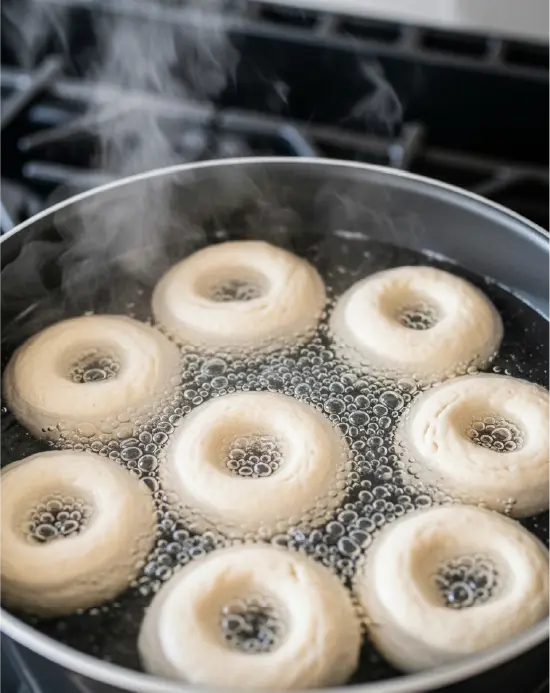
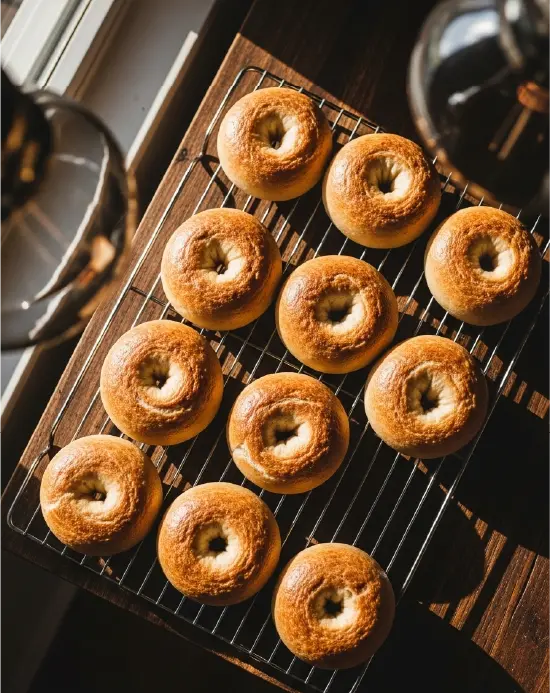
- Boil & bake: Bring a large pot of water to a gentle boil. Carefully drop in 2–3 bagels at a time and boil for 30 seconds per side. Use a slotted spoon to lift them out and place them on a parchment-lined baking sheet. Repeat with the remaining bagels. Then bake at 375°F for 20–25 minutes, or until they’re golden brown and smell incredible.
Notes & Variations
- For a glossy, bakery-style finish, brush the bagels with a beaten egg (or plant milk for vegan) right before baking.
- Add toppings after boiling, before baking sesame seeds, poppy seeds, everything bagel seasoning, or herb and seed combinations all work beautifully.
- Want a hint of whole grain flavor? Substitute ¼ cup of the flour blend with oat flour. It adds a subtle nuttiness that I absolutely love.
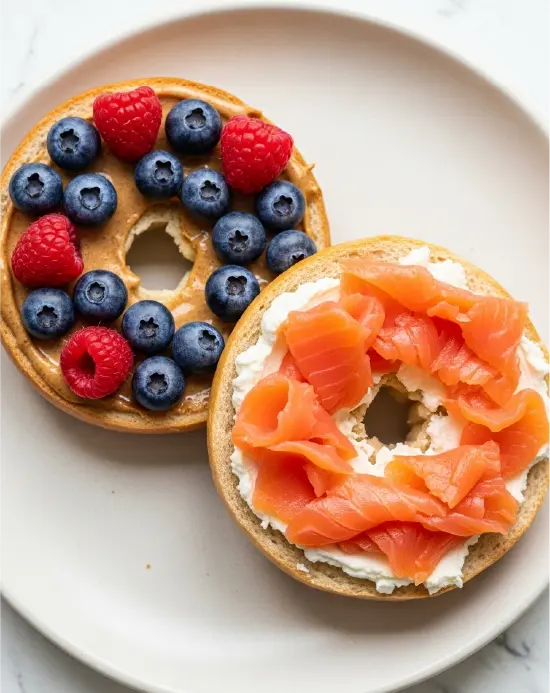
- These bagels are perfect for protein-packed toppings like smoked salmon, cream cheese, avocado, or nut butters.
This base recipe lets you test your own gluten free flour swap for bagels in real time and adjust based on how your dough feels. The more you make these, the more intuitive it becomes. You’ll start to recognize when the dough needs more water, when it’s ready to shape, and when it’s perfectly baked just by touch and smell.
Troubleshooting Your Gluten Free Flour Swap for Bagels
Let’s be honest gluten-free baking doesn’t always go smoothly the first time. Or the second. Or, if you’re like me, sometimes the fifth time either. The first batch of gluten free flour swap for bagels I attempted looked more like sad, flat discs than anything you’d find in a bakery. My kitchen looked like a flour bomb had gone off, and I was ready to give up and just buy store-bought.
But then I remembered what my grandmother Dalida used to say: “If something flops in the kitchen, it’s just the recipe telling you a secret.” So instead of giving up, I started paying attention to what went wrong and more importantly, why. Here’s what I learned, and how you can fix the most common problems without starting from scratch.
Common Problems & Easy Fixes
- Problem: Too Dry or Crumbly
- What’s happening: Your flour blend is absorbing more liquid than you gave it, or you’re missing a binder.
- The fix: Add more water, one tablespoon at a time, until the dough holds together when you press it. Also double-check that you added xanthan gum or psyllium husk without it, the dough simply won’t bind properly.
- Pro tip: After adding liquid, let the dough rest for 10 minutes. Sometimes it just needs time to hydrate fully before you can tell if you need more.
- Problem: Dense or Gummy Texture
- What’s happening: You either overmixed the dough or used too much starch in your flour blend.
- The fix: Mix more gently next time just until combined. And if you’re making your own blend, reduce the tapioca or potato starch ratio slightly. Try using more protein-rich flour (like sorghum or oat) and less starch.
- Pro tip: Make sure you’re letting the dough rest before shaping. This gives the starches time to settle and prevents that heavy, gummy feeling.
- Problem: Bagels Won’t Hold Shape
- What’s happening: Your dough structure is too weak, usually because there’s not enough binder or the flour blend lacks protein.
- The fix: Add more xanthan gum (start with an extra ½ teaspoon) or switch to a firmer flour blend. Sorghum-based blends tend to hold shape better than rice-only blends. Also, make sure you’re shaping the bagels gently but firmly they should feel cohesive, not fragile.
- Pro tip: If your shaped bagels are spreading before you boil them, pop them in the fridge for 15 minutes to firm up first.
- Problem: Pale, Dry Crust
- What’s happening: Your oven temperature might be too low, or you skipped the egg wash.
- The fix: Make sure your oven is preheated to at least 375°F (some ovens run cool, so use an oven thermometer if you have one). Brush the bagels with beaten egg, milk, or even a bit of maple syrup before baking for that beautiful golden shine. You can also add a small pan of water to the bottom of your oven for the first 10 minutes the steam helps create a better crust.
Remember, every gluten free flour swap for bagels has a learning curve. The dough feels different than wheat dough less stretchy, more delicate, sometimes a little temperamental. But that doesn’t mean it can’t bake into something absolutely delicious. You just have to learn its language, and that takes a little practice and a lot of patience.
Keep notes as you bake. Write down what worked and what didn’t. That’s what I did, and now I can almost feel when my dough is ready just by how it responds when I touch it. You’ll get there too.
Your Questions About Gluten-Free Bagel Baking Answered
What is a substitute for bread flour in bagels?
To replace bread flour in gluten-free bagels, use a blend of sorghum or oat flour with tapioca or potato starch, and add binders like xanthan gum or psyllium husk. This combination supports the structure, chewiness, and rise needed for a satisfying bagel.
Can bagels be made gluten-free?
Yes, bagels can absolutely be made gluten-free with the right flour blend. To succeed, use flours like sorghum or oat paired with starches and binders. The key is building a dough that holds shape through boiling and bakes into a chewy, golden crust.
Can I switch out gluten-free flour for regular flour?
Not exactly. While many recipes allow for a 1:1 swap, bagels require more care. A proper gluten free flour swap for bagels needs a custom blend, extra hydration, and binding agents to match the structure and chew of regular flour.
What is a good gluten-free substitute for bread flour?
A strong gluten free flour swap for bagels includes sorghum or oat flour combined with tapioca or potato starch and xanthan gum. This blend mimics bread flour’s strength, chew, and bakeability without gluten.
Why do gluten-free bagels turn out dense?
Dense gluten-free bagels usually need more hydration or a better binder. Adjusting your gluten free flour swap by balancing starches, adding xanthan gum or psyllium, and letting the dough rest can improve texture significantly.
Final Thoughts on Gluten Free Flour Swap for Bagels
If you’ve made it this far, you’re already doing something most people never try baking from scratch, adapting recipes, showing up in your kitchen even when things don’t go perfectly. And honestly? That matters so much more than getting every batch exactly right on the first try.
A gluten free flour swap for bagels isn’t about replicating a New York deli bagel down to the last molecule. It’s about reclaiming that comforting morning ritual the smell of fresh-baked bread, the satisfaction of slicing into something warm, the simple pleasure of breakfast that feels like home. Even if your pantry looks a little different now.
Whether you’re navigating celiac disease, trying to feel better in your body, supporting a family member, or just curious about gluten-free baking, you deserve food that nourishes and delights. Food that doesn’t make you feel like you’re missing out. Food that actually tastes good.
So don’t stress about perfect flour ratios or Instagram-worthy bagel shapes. Just keep showing up. Keep experimenting. Keep learning what your dough is trying to tell you. And remember what my grandmother taught me: the best food comes from patience, love, and a willingness to try again when something doesn’t work the first time.
Now go preheat that oven. You’ve absolutely got this. 💛
Looking for More Gluten-Free & High-Protein Recipes?
If you loved this guide to the perfect gluten free flour swap for bagels, you’ll feel right at home with the rest of my kitchen experiments and nourishing recipes. I share simple, heritage-inspired ideas made for busy lives always with heart, never with guilt.
More bagel recipes you might love:
- Gluten-Free Protein Bagels High protein and naturally gluten-friendly
- High-Protein Cottage Cheese Bagels My fastest, easiest recipe
- Greek Yogurt Protein Bagels Soft, tangy, and perfect for meal prep
- High-Protein Bagel Collection All my best bagel recipes in one place
👉 Want more recipes, breakfast inspiration, and behind-the-scenes kitchen stories?
Follow me on Facebook I share weekly tips, real-talk about cooking mishaps, and the kind of warm, practical advice my grandmother would approve of.
Let’s make mornings brighter together. 💛