
This 4-ingredient natural GLP-1 drink is something I started making after learning a piece of biology that most people never hear about and it changed how I think about appetite entirely. My mother Julia spent seventeen years as a physician assistant in Nashville, and one thing she said has stayed with me through every wellness trend I’ve ever explored: “The body already knows how to do most of this. Your job is to stop getting in the way and start giving it what it needs.”
I think about that a lot when I see the conversations happening around GLP-1 medications. Not because I’m against them, that’s a conversation between a person and their doctor. But because buried inside all the noise around Ozempic and Wegovy is a genuinely interesting piece of biology that most people never hear about: your gut already produces GLP-1 naturally. Every single day. And certain foods trigger more of it.
GLP-1 stands for glucagon-like peptide-1. It’s a hormone your intestinal cells release when they detect certain types of fiber and nutrients moving through your digestive tract. When GLP-1 goes up, a few things happen: your stomach empties more slowly, your appetite decreases, and your blood sugar rises more gradually after eating. These are exactly the mechanisms that make the pharmaceutical versions so effective for weight management. The difference is that your body can produce more of this hormone naturally when you feed it the right things.
This drink is built around four ingredients that specifically support GLP-1 release through the soluble fiber pathway. It’s not a replacement for medication if your doctor has recommended that. But if you’re looking for a food-based morning ritual that works with your body’s own appetite regulation system, this is one of the most direct ways I know to do that.
Quick Takeaways
- GLP-1 is a natural gut hormone your body already produces that regulates hunger and blood sugar
- Soluble fiber is one of the most studied natural triggers for GLP-1 release
- This drink uses 4 ingredients: oats, chia seeds, lemon, and ginger
- Drink it in the morning, ideally 20 to 30 minutes before breakfast
- Consistency matters more than any single glass
- This is a food-based habit, not a pharmaceutical replacement
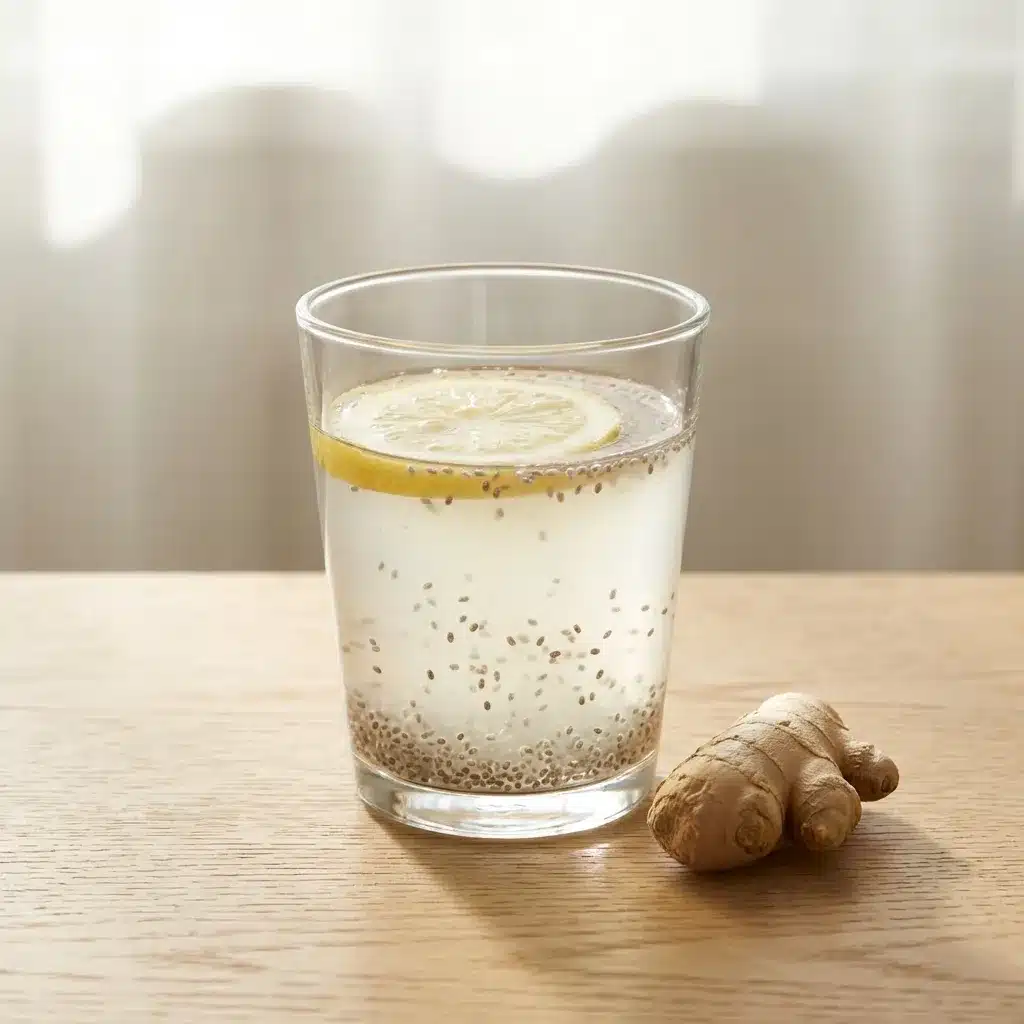
What GLP-1 Actually Does (And Why Food Can Trigger It)
I want to spend a minute here because the science is actually fascinating and it makes the recipe make a lot more sense once you understand it.
GLP-1 is produced by L-cells, specialized cells that line your small intestine and colon. When these cells detect certain nutrients passing through, particularly soluble fiber, they release GLP-1 into your bloodstream. From there it does three main things that matter for appetite and weight management.
First, it signals your pancreas to release insulin in proportion to how much glucose is in your blood, which helps prevent the sharp blood sugar spikes and crashes that drive cravings. Second, it slows gastric emptying, meaning food moves out of your stomach more slowly, which extends the feeling of fullness well past the meal itself. Third, it travels to your brain and activates satiety receptors in the hypothalamus, which is the region responsible for hunger signaling. Your brain receives the message to ease up on appetite, and it does.
My mom Julia would have loved explaining this. She had a way of making clinical mechanisms feel practical rather than intimidating. The simplified version she would have used: your gut is constantly talking to your brain about how hungry you should be. Soluble fiber is one of the clearest signals it can send that says, “We’re good. We don’t need more food yet.”
The pharmaceutical GLP-1 medications work by mimicking and extending this signal artificially. This drink works by giving your body the raw material to produce more of the signal on its own. Different mechanism, same direction.
The 4 Ingredients and Why Each One Earns Its Place
Every ingredient in this drink has a specific reason for being here. None of them are filler.
1. Oat Water (the GLP-1 trigger)
Oats contain beta-glucan, which is a type of soluble fiber that is among the most studied natural GLP-1 stimulants in food science research. When beta-glucan enters your small intestine, it forms a thick, viscous gel that slows digestion and directly stimulates L-cell activity. More L-cell activity means more GLP-1 release.
You don’t eat the oats whole in this drink. You soak them overnight, strain them, and use the oat water, which carries the soluble fiber and beta-glucan without the texture of oatmeal. It’s a light, slightly creamy liquid that blends easily with the other ingredients and tastes like a neutral, lightly grain-forward base.
2. Chia Seeds (satiety amplifier)
Chia seeds bring their own soluble fiber in the form of the gel they produce when soaked. This gel slows gastric emptying independently of the oat beta-glucan, so the two work in layers: oat water triggers the initial GLP-1 response, and chia gel extends the fullness window by keeping food in your stomach longer.
Chia seeds also add omega-3 fatty acids and a small but meaningful amount of protein, both of which support sustained energy without blood sugar spikes. If you’ve already been using chia water as part of your morning routine, this drink builds on that habit with the oat water layer adding the additional GLP-1 stimulus.
3. Fresh Lemon Juice (blood sugar support)
Lemon juice contributes citric acid and a small amount of vitamin C, but its most relevant role in this drink is the effect of citric acid on blood sugar. Studies have shown that adding acidic ingredients to a meal or pre-meal drink can reduce the glycemic response by slowing carbohydrate digestion. Less of a blood sugar spike means a gentler insulin response and a more gradual, sustained energy curve.
It also makes the drink genuinely pleasant to drink. Oat water and chia on their own are fine but bland. Lemon brightens the whole thing and gives it a clean, morning-appropriate flavor.
4. Fresh Ginger (metabolic and digestive support)
Ginger has been used in both Ayurvedic and traditional Chinese medicine for digestive support for thousands of years, and my grandmother Dalida kept a piece of fresh ginger root on her counter at almost all times. She called it her “kitchen medicine.” What she knew intuitively, research has since confirmed: ginger’s active compounds (gingerols and shogaols) support gastric motility, reduce nausea, and have a mild thermogenic effect that gently increases metabolic heat.
In the context of this drink, ginger supports the digestive process that the oat fiber and chia gel have already set in motion. It also adds warmth and a little spice that makes the drink feel like something you actually chose to make rather than something you’re forcing yourself through.
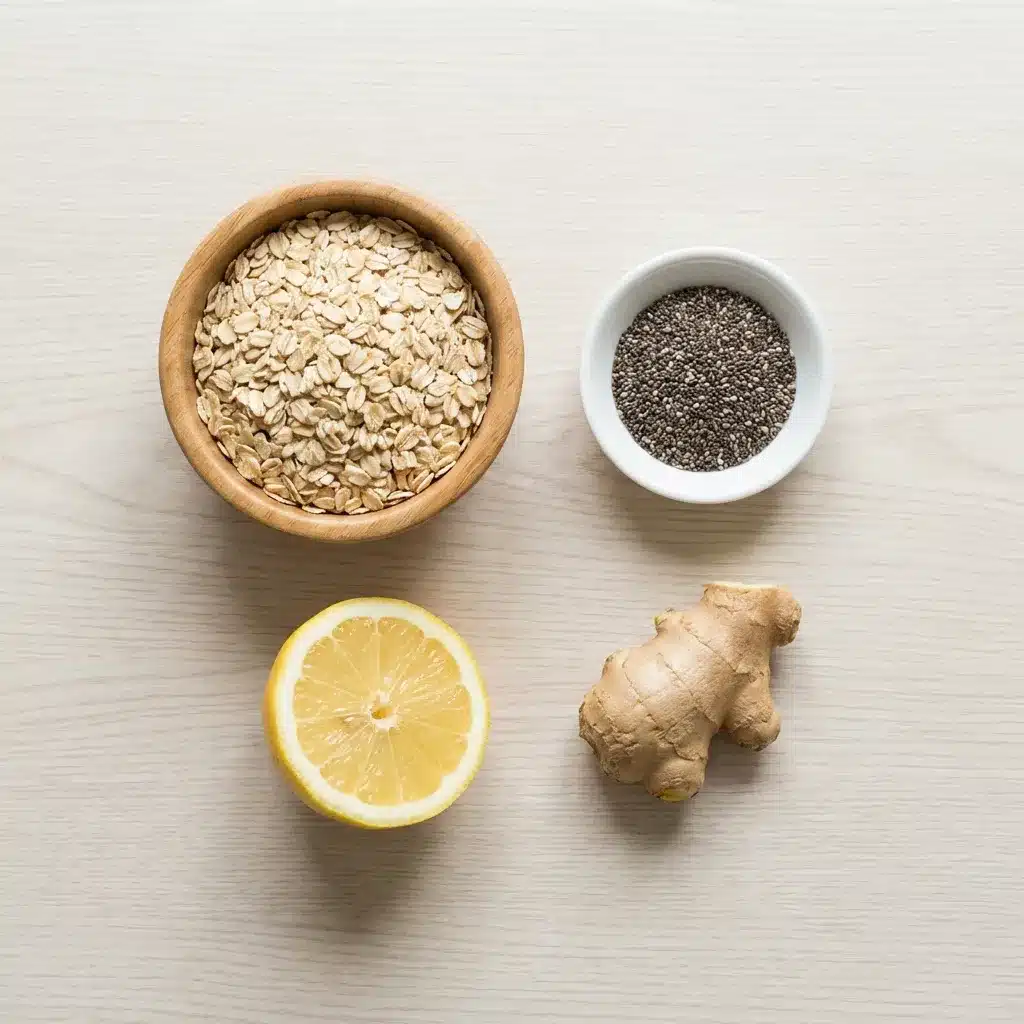
The 4-Ingredient Natural GLP-1 Drink Recipe
There’s a little prep the night before, but the morning itself takes about two minutes. Once you’ve done it a few times it becomes automatic.
What You Need (serves 1)
- 3 tablespoons rolled oats (not instant, not steel-cut)
- 1 teaspoon chia seeds
- Juice of half a lemon (about 1 tablespoon)
- 1 teaspoon fresh ginger, finely grated (or a thin slice steeped in the oat water)
- 1 cup water for soaking, plus extra to top off if needed
- A small pinch of cinnamon (optional, but it adds warmth and has its own blood sugar benefits)
The Night Before (2 minutes)
Add your rolled oats to a small jar or bowl. Pour 1 cup of cold water over them and give them a stir. If you’re using a ginger slice instead of grated ginger, drop it in now so it infuses overnight. Cover and refrigerate. That’s the entire night-before step.
The Morning (2 minutes)
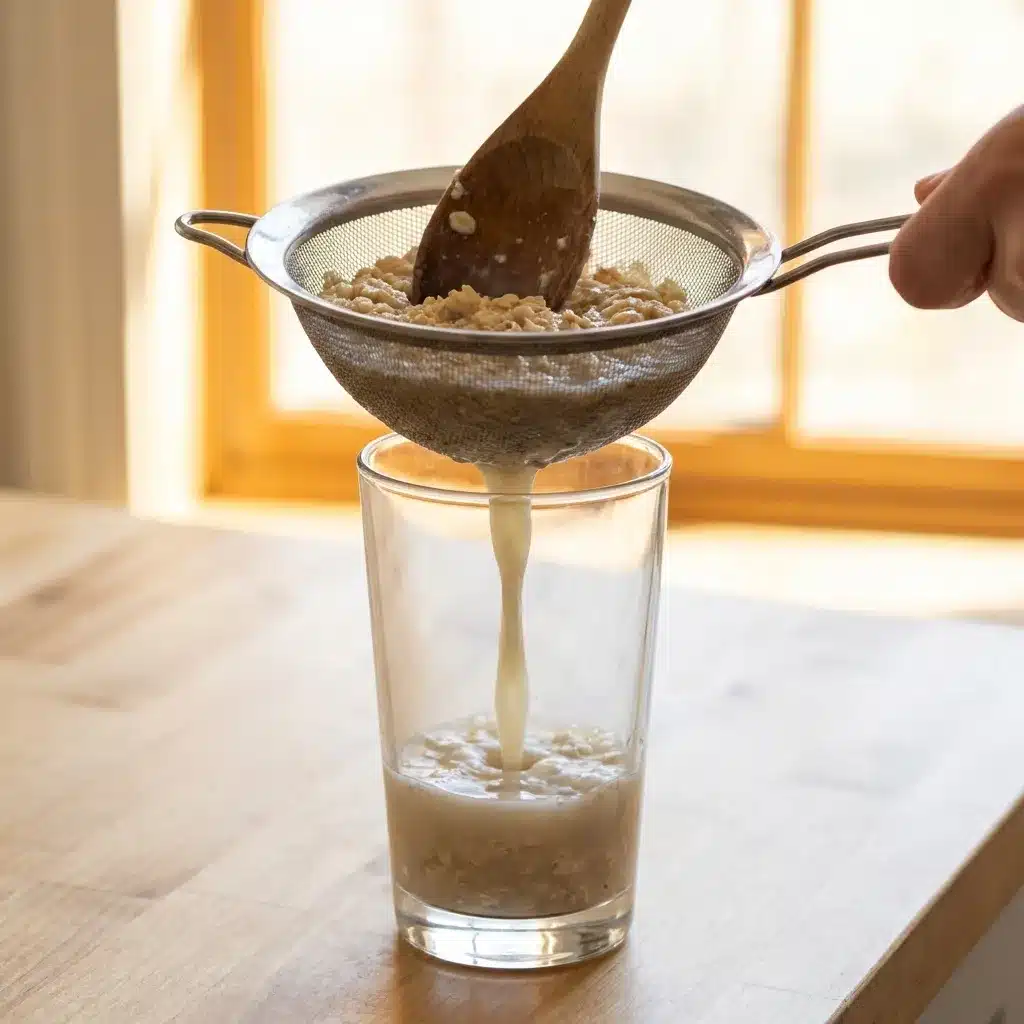
Step 1: Strain the oat water. Pour the soaked oats through a fine mesh strainer into a glass, pressing gently with a spoon to extract as much liquid as possible. The oat water will be slightly cloudy and a little viscous. That’s the beta-glucan doing its job. You can save the strained oats for breakfast if you like, they’re perfectly good to eat as overnight oats.
Step 2: Add the chia seeds. Stir your teaspoon of chia seeds directly into the oat water. They don’t need to be pre-soaked for this drink since they’ll begin absorbing liquid as you make and drink it. If you prefer them fully gelled, soak them separately for 10 minutes first.
Step 3: Add lemon and ginger. Squeeze in your lemon juice and stir in the grated ginger (or remove the ginger slice if you steeped it overnight). If you’re adding cinnamon, add a pinch now.
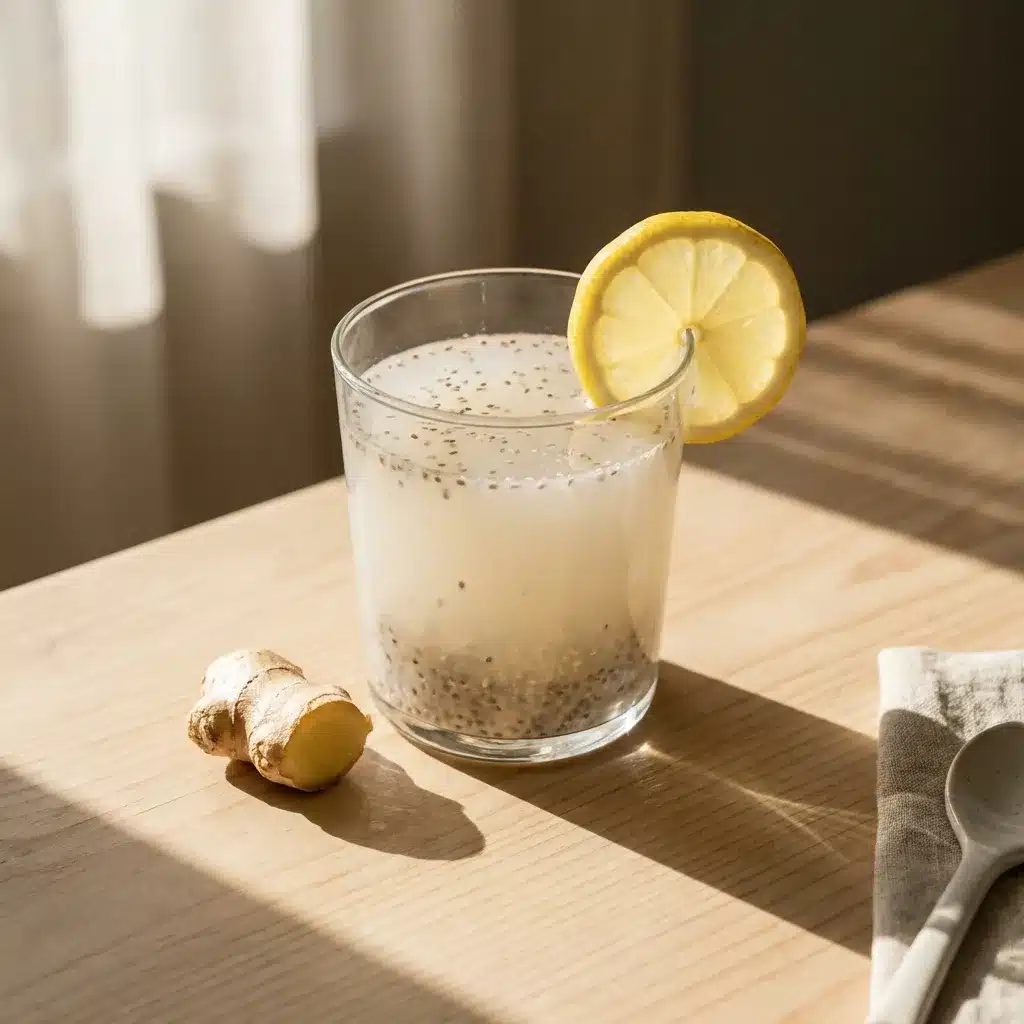
Step 4: Drink it within 10 minutes. As the chia seeds absorb the oat water, the texture thickens. Drink it relatively soon after making it, while it’s still pourable and light. Some people like a slightly thicker consistency and wait a few minutes intentionally. That’s fine too. Just stir before drinking since the chia seeds settle.
When to drink it: First thing in the morning, ideally on an empty stomach or at least 20 to 30 minutes before breakfast. The GLP-1 stimulus and satiety effect works best when the fiber reaches your intestines before a meal, not alongside or after one.
Tips, Variations, and What to Do If You Don’t Love It
If the Texture Bothers You
The most common feedback I get about oat water is that the slightly thick, starchy texture takes getting used to. A few things help. First, use less oats: start with 2 tablespoons instead of 3 and work up. Second, strain more thoroughly, pressing the oats hard against the strainer removes more starch and gives you a lighter, cleaner liquid. Third, add more lemon, the acidity cuts through the starchiness and makes the whole drink feel lighter and more refreshing.
The Warm Version
In cooler months I make a warm version of this drink. Instead of refrigerating the oats overnight, I soak them in room temperature water for 20 minutes in the morning, strain, and then gently warm the oat water on the stove (don’t boil it). Add the ginger while it’s warm so it infuses quickly, then let it cool slightly before adding the lemon so you don’t destroy the vitamin C. Stir in chia seeds and drink warm like a morning tonic. It’s become one of my favorite cold-weather rituals.
Add-Ins That Work Well
Once you have the base down, a few additions layer in well without undermining the function of the drink. A teaspoon of raw honey adds mild sweetness and a small amount of prebiotic benefit. A pinch of cayenne adds a thermogenic kick that pairs with the ginger. A teaspoon of apple cider vinegar turns this into a broader digestive support drink that overlaps nicely with the gelatin trick approach to pre-meal preparation.
What doesn’t work well here: dairy milk (it can bind to the beta-glucan and reduce its effectiveness), sweetened juices (they undercut the blood sugar management you’re working toward), and protein powder (it changes the texture significantly and isn’t necessary for this specific purpose).
What This Drink Can and Cannot Do
I want to be honest with you the same way I always am on this site, because I think you deserve that more than you deserve hype.
This drink will not produce the same magnitude of effect as a GLP-1 pharmaceutical. Those medications work at a pharmacological dose and extend the hormone’s activity far beyond what food alone can achieve. If your doctor has recommended medication, this drink is not a substitute for that conversation.
What this drink can do, if you use it consistently, is meaningfully support your body’s natural appetite regulation. Most people who drink it daily for two to three weeks report eating less at breakfast without trying, feeling full longer after meals, and experiencing fewer mid-morning energy crashes. Those are real effects that come from real mechanisms, not placebo.
The key word is consistently. A single glass of oat water doesn’t trigger enough of a GLP-1 response to notice. A daily habit of supporting that pathway over weeks starts to shift your baseline hunger patterns in a way that genuinely shows up in how you eat. That’s the goal.
If you want to explore other food-based approaches to natural GLP-1 support alongside this drink, the GLP-1 activating foods and recipes guide is a solid companion read. And if you’ve been exploring the smoothie route, the GLP-1 smoothie recipes collection gives you more options to rotate through.
⚠️ A note from Olivia:
This post discusses natural food-based approaches to supporting GLP-1, a hormone involved in appetite regulation. It is not medical advice and is not intended as a substitute for prescribed medication or professional medical guidance. If you are managing diabetes, taking blood sugar medications, or considering GLP-1 pharmaceutical treatments, please speak with your doctor before making changes to your diet. I am not a doctor or dietitian, just someone who believes in understanding the science behind what we eat and why it matters.
Your Questions About the Natural GLP-1 Drink Answered
What foods naturally trigger GLP-1 release?
Soluble fiber is the most studied natural GLP-1 trigger. Foods high in soluble fiber include oats (especially the beta-glucan in rolled oats), chia seeds, flaxseeds, legumes, apples, and barley. Fermented foods that support a healthy gut microbiome also indirectly support GLP-1 production over time, since the gut bacteria that produce short-chain fatty acids from fiber are part of the same pathway that stimulates L-cells to release GLP-1.
Is this drink the same as the natural Mounjaro or Ozempic recipes online?
It overlaps with the same concept. Many of the “natural Mounjaro” recipes circulating online are built around the same principle: using food-based ingredients to support the body’s natural GLP-1 pathway. This drink takes a more targeted approach by focusing specifically on the soluble fiber and beta-glucan mechanism rather than broader wellness ingredients. The natural Mounjaro recipe on this site uses a different ingredient combination that’s also worth exploring.
Can I use quick oats instead of rolled oats?
Rolled oats are preferred because they retain more of their beta-glucan content than quick oats, which are more heavily processed. Quick oats will still work and produce oat water, but you’ll get a slightly lower concentration of the soluble fiber you’re after. Steel-cut oats need much longer soaking time and don’t produce the same easily-strained oat water, so they’re not ideal for this drink.
How long before I notice a difference?
Most people notice something subtle within the first week: a slightly reduced appetite before breakfast or feeling full sooner during meals. More consistent effects on hunger patterns and blood sugar stability typically show up after two to three weeks of daily use. Like most food-based wellness habits, the results are cumulative rather than immediate.
Can I drink this if I have diabetes or take blood sugar medication?
Please check with your doctor first. Both oat beta-glucan and lemon juice can affect blood sugar levels, and if you’re managing diabetes or taking medications that regulate blood sugar, adding something that further influences that system without your doctor’s knowledge could affect how your medication performs. This is a situation where the conversation with your healthcare provider is genuinely important.
Can I drink this at night instead of in the morning?
You can, but you’ll get less benefit from the pre-meal satiety effect since most people eat their largest meal in the evening rather than at breakfast. If you want an evening option that supports digestion and pre-dinner fullness, the chia water recipe is a lighter choice for that time of day. This GLP-1 drink works best first thing in the morning when your digestive system is ready to process it before your first meal.
Your Body Already Knows How to Do This
That’s the part I keep coming back to. GLP-1 isn’t something that only exists in a syringe. It’s a hormone your body has been producing your entire life, in your gut, in response to what you eat. The question is just whether you’re giving it the right fuel to work with.
This drink, four ingredients soaked the night before and strained in the morning, is one of the most direct ways I know to feed that system. It won’t replace medication if you need medication. But if you’re looking for a grounded, food-based morning habit that works with your body’s own appetite chemistry, this is exactly that.
Start with a week. Make it the night before so there’s no friction in the morning. Drink it before breakfast and pay attention to how your hunger feels two hours later. I think you’ll notice something worth continuing.
And if you want to keep building out a morning routine around natural appetite support, the homemade appetite suppressant drinks roundup has more options that work well alongside this one. Healthy can feel like home, especially when it’s something you actually understand.
P.S. Have you tried oat water before, or is this your first time hearing about it? I’d love to know in the comments. And for more practical, research-backed wellness recipes from my Nashville kitchen, find me on my Facebook page where I share what’s working for me week to week.