I still remember the steam rising from the black pot my grandmother used, the way the smell of peppers and garlic carved a path through the house and gathered everyone to the kitchen before the first spoonful. The rice swelled, the sausage browned, and a soft, warm hush fell over the table as we waited. That hush is what this Jambalaya brings back. It is a bowl that holds memory, heat, and the quiet joy of being together.
Why Jambalaya Belongs in Your Kitchen Story
Jambalaya is the kind of dish that holds a family in its heat. It is honest food. It feeds more than the body. I make it when I want to soothe a tired week or celebrate a small victory. The pot carries the seasons of our life: high summer bell peppers, late winter stews, and the spice that wakes the heart on cool evenings.
My mother taught me to pay attention to the small things while stirring. She would say that the color of the rice and the shine on the sausage tell you more than a recipe card. That wisdom came from a kitchen that learned to stretch love into every meal. Making Jambalaya is as much about practicing patience as it is about seasoning.
This recipe fits into family life easily. It cooks in a single pan, and it welcomes hands. Siblings can chop, a neighbor can bring a loaf of bread, and stories make their rounds while the pot works its slow magic. Jambalaya belongs in your kitchen because it is a vessel for those moments and because it reminds us why we cook: to make people feel held.
How This Recipe Comes Together
“Every time I stir this pot, it smells just like Sunday at home.”
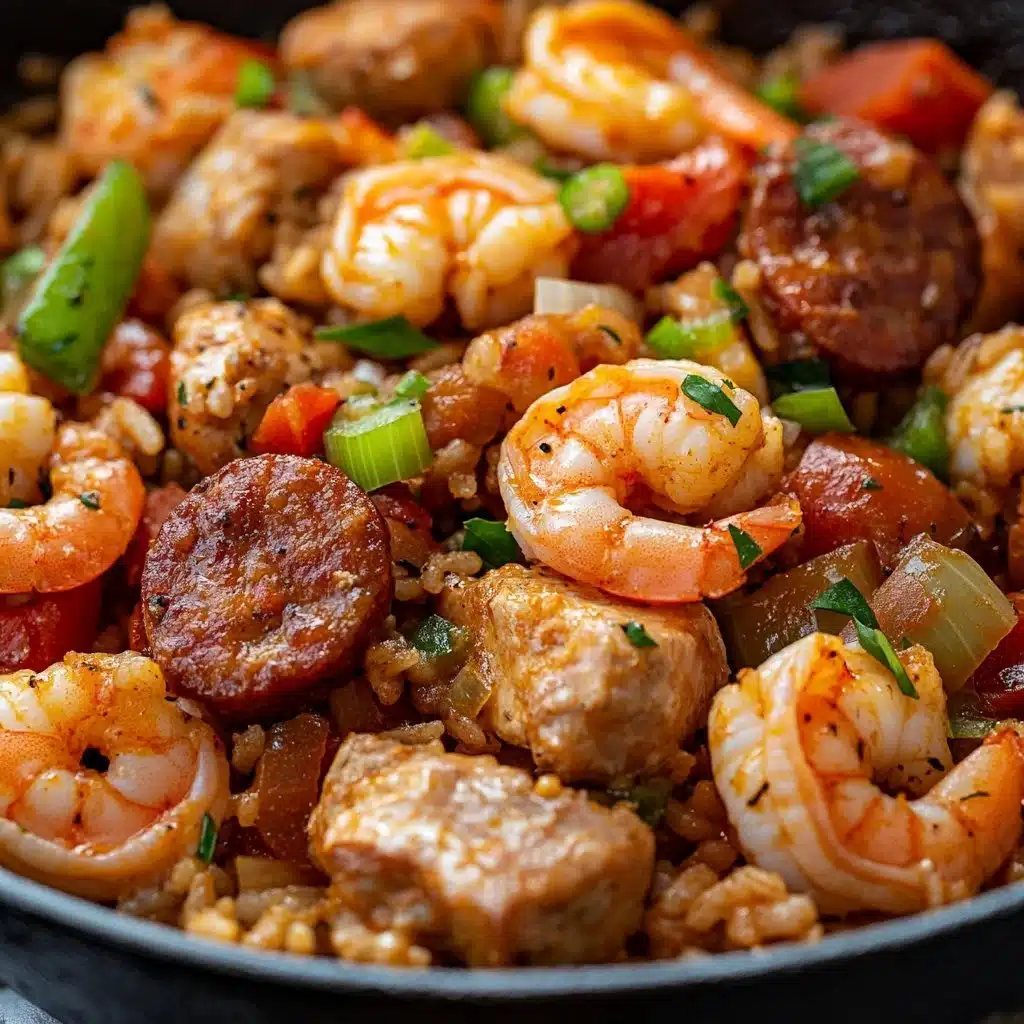
Before we list the ingredients, picture the colors and sounds. First, the meat sizzles and releases fat that smells warm and deep. Then the vegetables soften, and the pan carries an emerald of bell pepper and celery alongside the sweet translucence of onion. When the tomatoes go in, the pot takes on a rich red hue. The rice blooms, soaking up stock and seasoning until the grains sit proud and separate, not mushy.
As you cook, watch for visual cues. The sausage should show golden edges. The onions should turn glossy and keep a touch of bite. The rice should swell but stay distinct. Texture and aroma guide you as much as time and temperature. The result is a chorus of textures: firm shrimp, tender chicken, and a bed of rice that sings with spice.
This overview is the scaffolding for the method. You will work in stages: brown the meats, soften the aromatics, braise with tomatoes and stock, then finish gently with shrimp. That rhythm keeps flavors bright and lets each element shine.
Ingredients You Will Need
1 pound chicken, diced
1 pound shrimp, peeled and deveined
1 pound andouille sausage, sliced
1 onion, chopped
1 green bell pepper, chopped
2 celery stalks, chopped
4 cloves garlic, minced
1 can diced tomatoes
4 cups chicken broth
2 cups long-grain rice
2 tablespoons Cajun seasoning
Salt and pepper to taste
Green onions, for garnish
Parsley, for garnish
Side notes that help: use fresh parsley if you can; it brightens the flavor and adds a soft green finish. If possible, buy andouille from a trusted butcher; the smoky notes lift the whole pot. For rice, long-grain keeps the texture light. If you prefer a deeper tomato note, choose diced tomatoes with basil and garlic. If you use frozen shrimp, thaw them gently in the refrigerator the night before.
Step-by-Step Directions
- In a large skillet, heat oil over medium heat. Add the chicken and sausage; cook until browned.
Let the meat sear and develop color for about 4 to 6 minutes.
Tip: Let the meat sit in the hot pan long enough to form golden edges. That color is flavor. - Stir in the onion, bell pepper, celery, and garlic; cook until softened for about 5 minutes.
Cook until the onion looks translucent and the pepper softens, but keep some texture.
Mini-tip: Stir until the vegetables look glossy and fragrant, watching for tender edges. - Add diced tomatoes, chicken broth, rice, Cajun seasoning, salt, and pepper. Bring to a boil, then reduce heat, cover, and simmer for about 20 minutes until rice is cooked.
Once the liquid simmers, lower the flame so it barely bubbles and let the rice absorb the broth.
Technique note: Resist the urge to lift the lid often; steam helps the rice cook evenly. - Stir in shrimp, cover, and cook for an additional 5-10 minutes until shrimp are pink.
The shrimp should curl and turn opaque. Do not overcook; shrimp finish quickly.
Watch: Shrimp go from translucent to rosy in moments, so check after five minutes. - Serve hot, garnished with green onions and parsley.
Spoon into deep bowls so the steam lingers as you sit.
Serving tip: Add extra chopped green onions at the table for brightness and a last fresh bite.
These steps are straightforward by design. The method favors building layers of flavor. Brown meat first to make a deep base. Soften vegetables next to coax out their sweetness. Then let rice do its work, absorbing the seasoned broth until each grain carries the memory of the pot.
Bringing Jambalaya to the Table
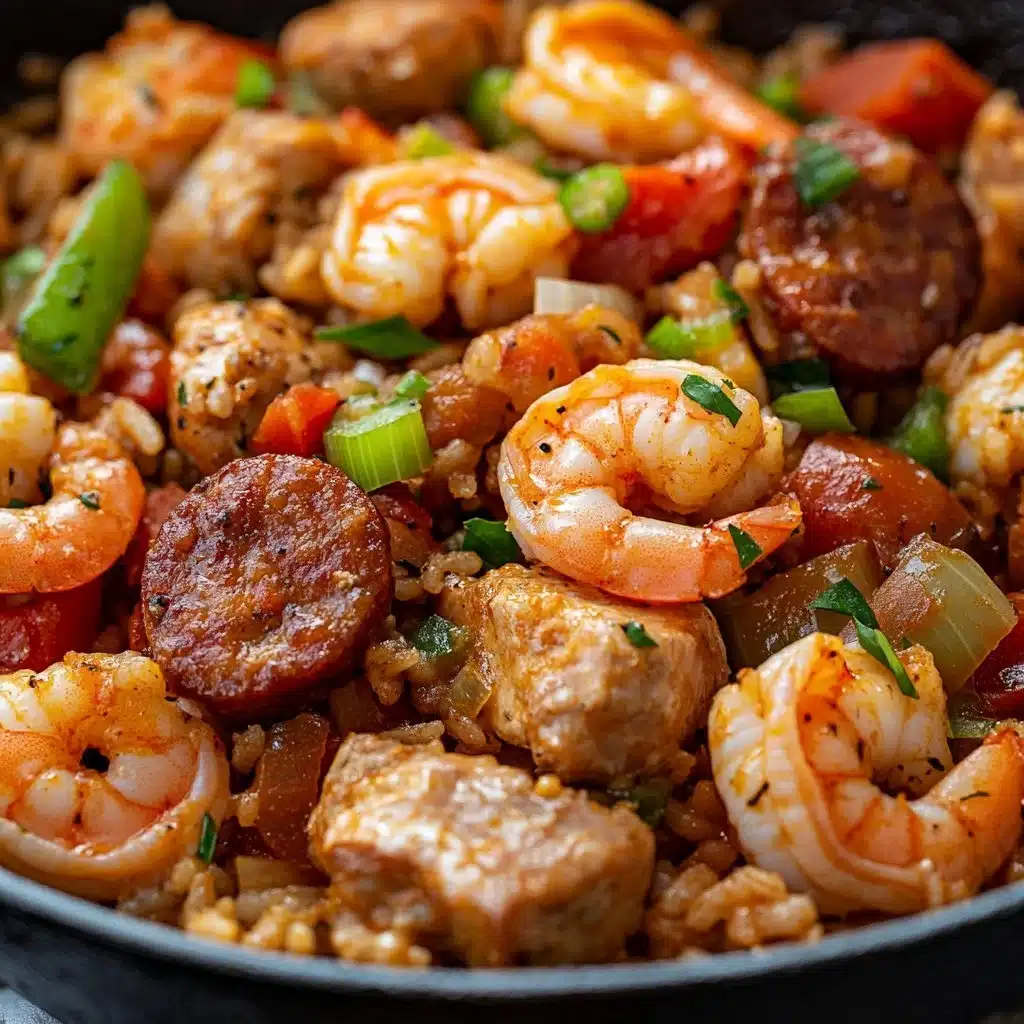
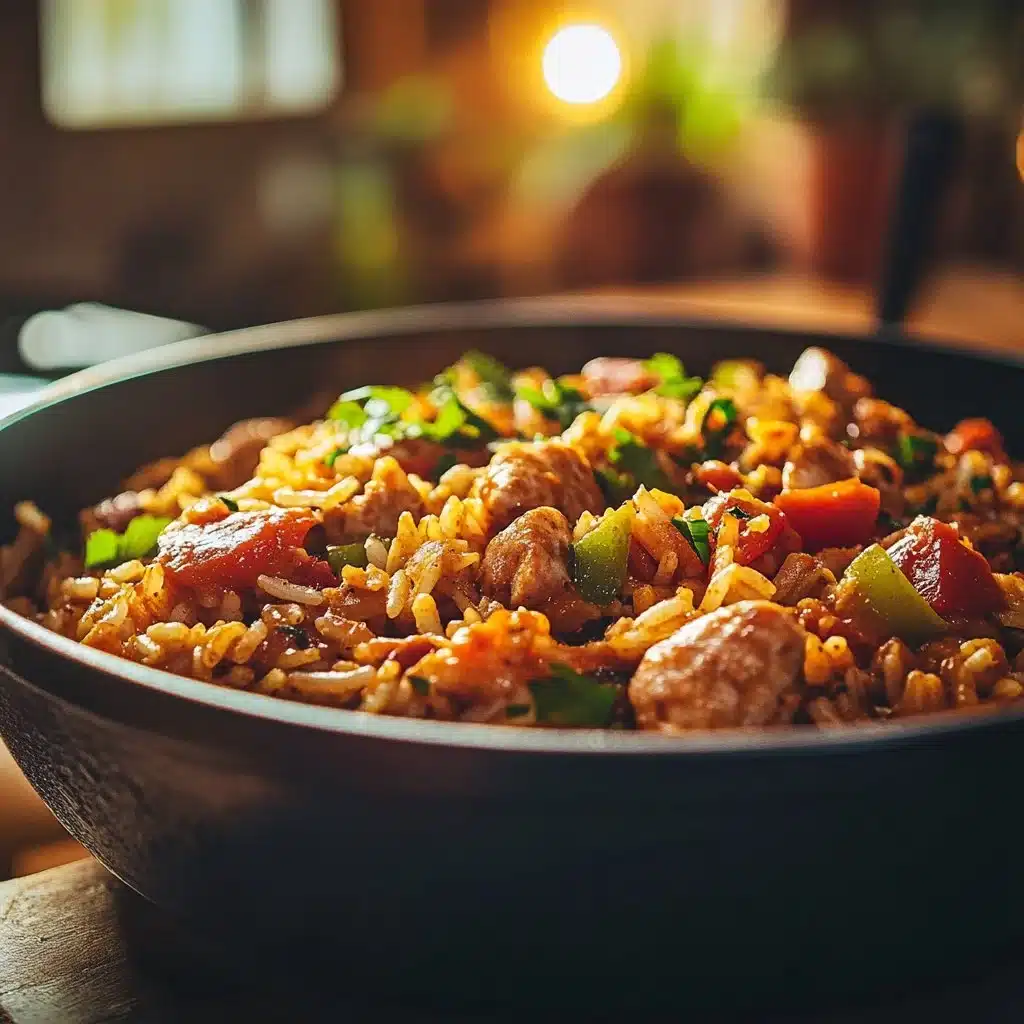
There is always a hush when Jambalaya comes to the table. The steam curls toward faces, and hands reach for warm bowls. We place the pot on a trivet at the center. Bread is optional, but a crisp baguette or dense cornbread invites people to sop spices from the bowl.
I like serving this with a simple green salad for contrast. Crunch and cool leaves balance the warm, rich stew. A crisp cucumber salad or lightly dressed slaw makes a gentle partner. For a larger gathering, set out lemon wedges. A squeeze of lemon brightens the shrimp and lifts the whole plate.
The ritual matters: passing bowls, offering seconds, and pausing between stories to savor the texture. Jambalaya is a dish that asks for presence. Taste it slowly and notice the way the sausage’s smokiness meets the rice’s starch, how the shrimp’s sweet flesh offsets the savory broth.
How to Keep This Dish Restorative Tomorrow
Jambalaya is one of those dishes that grows kinder with time. If you have leftovers, let the pot cool at room temperature for no more than two hours. Then transfer to airtight containers and refrigerate. Properly stored, it keeps well for up to 3 to 4 days.
When reheating, add a splash of chicken broth or water to revive the rice. Warm gently on the stove over low heat and stir so the steam circulates. If you use a microwave, cover the bowl and heat in short bursts, stirring between each, until the rice is hot and the shrimp are just warmed through.
For longer storage, you can freeze Jambalaya in freezer-safe containers for up to 3 months. Thaw overnight in the refrigerator before reheating. Note that the texture of the shrimp can change after freezing; some people prefer to leave shrimp out of the frozen portion and add fresh-cooked shrimp when reheating.
Flavors deepen overnight. The spices settle and the rice absorbs more of the broth, making second-day Jambalaya often richer. Add a quick handful of chopped parsley or fresh green onions before serving to brighten those deeper flavors.
Dalida’s Little Secrets
- Balance the seasoning in layers. Salt the cooking liquid lightly at first. Taste after the rice absorbs most of the broth and adjust.
This prevents an overly salty final dish and lets the rice become the final judge. - Use a heavy-bottomed pan. A cast-iron skillet or a wide Dutch oven distributes heat and reduces hot spots.
That even heat helps the rice cook without burning and gives nice color to the meats. - Toast the rice first if you like a nuttier flavor. Stir it in with the vegetables for a minute before adding broth.
This extra step gives subtle depth but keep it brief to avoid drying the grains. - Layer textures. Keep some vegetables slightly firm to offer a contrast to the softened rice and tender shrimp.
Textures make a bowl interesting beyond seasoning alone. - Choose your heat with care. Cajun seasoning is versatile, but you can start with less and pass hot sauce at the table.
This lets each person tailor their bowl while keeping the family meal welcoming to all ages.
These are the small choices that matter. They are less about exact measures and more about listening to the pot. I learned them slowly. Each tip came from evenings when a dish needed saving or a flavor needed lifting. They are practical and patient.
Discover More Heritage Recipes
Every recipe carries a piece of memory, care, and tradition. If you enjoyed this dish, you might also love the other comforting meals I’ve shared from my kitchen. Each one is crafted with the same patience and heart that have guided me for decades.
👉 Explore More Heritage Recipes Here
Family Twists on Jambalaya
My family and our neighbors each keep a twist that makes the pot feel like home. Some families favor a darker, tomato-rich jambalaya that slows longer and leans toward a stew. Others prefer a lighter Creole style with more pronounced vegetable notes and less smoke.
In Louisiana, you will find versions that use tasso ham instead of chicken for a deeper, peppery note. Coastal kitchens might add crawfish tails in season for a sweet and briny touch. Inland cooks sometimes swap andouille for smoked kielbasa or add leftover ham for economical comfort.
My brother likes to add a little smoked paprika and a splash of Worcestershire at the end for depth. A cousin stirs in a handful of roasted corn when it is fresh, which adds a pop of sweetness. For a vegetarian option, replace the meats with hearty mushrooms, smoked tempeh, and vegetable broth; the cooking method stays the same and the result remains soulful.
These variations honor how food travels through families. Each change keeps the spirit but allows the pot to fit your pantry, season, and taste. Invite your family to suggest a tweak. That small act makes the meal more than a recipe. It becomes a shared memory in the making.
FAQs About Jambalaya
Can I make this dish less spicy for children?
Yes. Start with less Cajun seasoning and leave hot sauce off the table. The base flavors of sausage and tomatoes still make a joyful meal.
How long does the whole recipe take from start to finish?
Allow about 45 to 60 minutes, depending on how quickly you brown the meats and how your rice cooks. Plan extra time if you chop with helpers.
Can I use brown rice instead of long-grain white rice?
You can, but cooking times and liquid amounts change. Brown rice takes longer and may need more liquid. Consider cooking brown rice separately and folding it in at the end to avoid overcooking the proteins.
Do I have to use andouille sausage?
No. Andouille gives a signature smoky note, but smoked sausage, kielbasa, or even sliced ham will work in a pinch. Choose a smoky, flavorful option for the best result.
What is the best pot to use for this Jambalaya?
A heavy-bottomed skillet or Dutch oven about 4 to 6 quarts works well. It holds heat evenly and provides space to stir without crowding.
These answers come from a kitchen that uses dishes to bring people together. I aim to help you feel confident and safe trying the recipe. If you worry about one step, start slow and taste often. Cooking this way is a kind of listening.
A Final Thought
This pot of Jambalaya is an invitation. It asks you to gather, to share, and to pass bowls with stories between spoons. It is a recipe that welcomes mistakes and grows with time. When you serve it, the kitchen will smell like memory and the table will feel like a small sanctuary.
If you would like a one-pan variation to try with a similar method and fewer dishes, I recommend exploring Easy One Pan Jambalaya – Tastes Better from Scratch for ideas on simplifying cleanup while keeping flavor.
For a deeper look at regional recipes and a long-standing home in the jambalaya family, I often turn to historical and home-cook perspectives such as Jambalaya: Chuck’s recipe – The Gumbo Pages for context about how traditions shift across kitchens.
May your pot fill your house with warmth, and may you find, in the act of stirring, a gentle rhythm that brings everyone closer. Until the next meal, keep a welcome in your kitchen and a seat for the stories.
Follow us on social for more recipe ideas & inspiration!
Jambalaya
Would you like to save this recipe?
By submitting you agree to receive this recipe and occasional emails. Unsubscribe anytime.
Ingredients
Meats
- 1 pound chicken, diced
- 1 pound shrimp, peeled and deveined Thaw gently if frozen.
- 1 pound andouille sausage, sliced Use from a trusted butcher for best flavor.
Vegetables and Aromatics
- 1 medium onion, chopped
- 1 green bell pepper, chopped 1
- 2 stalks celery, chopped
- 4 cloves garlic, minced
Liquids and Seasonings
- 1 can diced tomatoes For a deeper flavor, consider tomatoes with basil and garlic.
- 4 cups chicken broth
- 2 cups long-grain rice Long-grain helps maintain texture.
- 2 tablespoons Cajun seasoning Adjust to taste for spice level.
- to taste Salt and pepper
Garnishes
- to taste Green onions, for garnish Add more at the table for brightness.
- to taste Parsley, for garnish Fresh parsley brightens flavor.
Instructions
Preparation
- In a large skillet, heat oil over medium heat. Add the chicken and sausage; cook until browned for about 4 to 6 minutes.
- Stir in the onion, bell pepper, celery, and garlic; cook until softened for about 5 minutes.
Cooking
- Add diced tomatoes, chicken broth, rice, Cajun seasoning, salt, and pepper. Bring to a boil, then reduce heat, cover, and simmer for about 20 minutes until rice is cooked.
- Stir in shrimp, cover, and cook for an additional 5-10 minutes until shrimp are pink.
Serving
- Serve hot, garnished with green onions and parsley. Spoon into deep bowls.
Last Step: Don’t forget to leave a rating and comment below! It helps other readers find the best recipes — and it helps us too!
Tips & Notes:
Nutrition Information: Serving: 6 | Calories: 500kcal | Carbohydrates: | Protein: | Fat: | Sodium: | Fiber: | Sugar:
Nutritional information is provided as a courtesy and calculated automatically. Values can vary depending on the brands and ingredients you use, so if you’re tracking closely, I recommend calculating with your own preferred tool.